
Authentic Manuka Honey Brands: 2026 Buyer's Guide
Table of Contents
- What Makes Manuka Honey Authentic
- UMF vs MGO Manuka Honey Ratings: Reading the Numbers
- The Benefits of Manuka Honey for Digestion
- How to Spot Counterfeit Manuka Honey Before You Buy
- Manuka Honey Wellness Tonic Recipes You Can Make at Home
- Contraindications, Side Effects, and Daily Use
- Sustainability and Environmental Impact of Manuka Honey
- Frequently Asked Questions
Last Updated: October 3, 2026
What Makes Manuka Honey Authentic
Manuka honey is a monofloral honey produced when bees collect nectar primarily from the flowers of the Leptospermum scoparium shrub, native to New Zealand. Its defining trait is methylglyoxal (MGO), the compound behind its antibacterial activity.
At Bite Me Wellness Tonic, we use manuka honey in our daily wellness blend. Below, we break down how to read the labels, spot fakes, and choose a jar worth your money.
Monofloral vs Multifloral: Why the Label Matters
Monofloral manuka honey comes predominantly from one flower source and carries higher, more consistent MGO levels. Multifloral manuka blends manuka nectar with other floral sources, lowering both potency and price. Both can be legally sold as manuka, but a jar can be labeled "manuka" and still contain only a modest share of manuka nectar.
UMF vs MGO Manuka Honey Ratings: Reading the Numbers
UMF and MGO describe the same underlying compound but are not interchangeable labels. MGO (methylglyoxal) is the chemical responsible for manuka honey's antibacterial activity. UMF (Unique Manuka Factor) is a certified grading system that factors in MGO alongside other markers, including leptosperin and DHA.
Here is how the two scales line up:
| UMF Rating | MGO Level (mg/kg) | Typical Use |
|---|---|---|
| UMF 5+ | MGO 83+ | Everyday sweetener |
| UMF 10+ | MGO 263+ | Daily wellness support |
| UMF 15+ | MGO 514+ | Higher-potency use |
| UMF 20+ | MGO 829+ | Premium tier |
Higher numbers mean a higher concentration of the active compound, not automatically "better" for every use, but a sign you are paying for measurable activity rather than a marketing claim.
What Each Marker Actually Tells You
The three markers on a UMF label do different jobs:
- MGO is the antibacterial compound itself, the number most closely tied to the activity buyers are paying for.
- Leptosperin is found only in manuka nectar, confirming the honey came from the Leptospermum scoparium flower rather than a blend dressed up as monofloral.
- DHA is the precursor that converts to MGO over time, which is why fresh batches can read differently than older ones.
A jar that lists only MGO and skips leptosperin tells you less than one that lists all three.
How the UMF Grading System Works
The UMF rating is administered by an industry body that licenses producers and requires batch testing at independent laboratories. A jar carrying the UMF mark has been tested against the markers above, and the number on the front should match the certificate behind it. Any brand can print "MGO 500+" on a label; only a licensed producer can print a UMF rating.
How to Cross-Check a Label in 60 Seconds
When you pick up a jar, run this quick sequence:
- Find the UMF number on the front.
- Confirm the MGO number on the back matches the UMF tier in the table above.
- Look for a batch or lot number.
- If the brand publishes lab results, search that batch number on the producer's site.
If the front says UMF 15+ and the back says MGO 250, something is off, a clear signal that a label was assembled for marketing rather than testing.
Why the Numbers Are Not the Whole Story
A high rating is not a guarantee of quality on its own. Heat degrades MGO over time, so a jar that sat in a hot warehouse or on a sunny shelf may test lower than its label claims, one reason buying from producers who publish batch dates and storage guidance is worth the extra step.
A UMF rating describes the concentration of a compound in a food. It is not a measure of how that food will affect your body, and it is not a medical claim. Honey is a food, and the rating is a quality marker, not a treatment indicator.
The Benefits of Manuka Honey for Digestion
Many people turn to manuka honey for digestive comfort. Honey is a natural prebiotic, meaning it can feed beneficial gut bacteria, and manuka's antibacterial compounds may help support a balanced gut environment. It fits that role well as a food ingredient, soothing, easy to take daily, and naturally paired with gut-friendly ingredients like ginger and turmeric.
What the Research Suggests and What It Doesn't
Manuka honey has been studied for its antibacterial properties, and its MGO content is well documented.
Honey is a food, not a treatment. Think of manuka honey as a supportive ingredient in a broader wellness routine, not a fix on its own.
For official guidance on what foods can and cannot claim, the FDA's guidance on food labeling and health claims is the place to check.
How to Spot Counterfeit Manuka Honey Before You Buy
The most reliable way to avoid counterfeit manuka honey is to buy only jars with a certified UMF or MGO rating, a named producer, and a batch-testing reference you can look up.
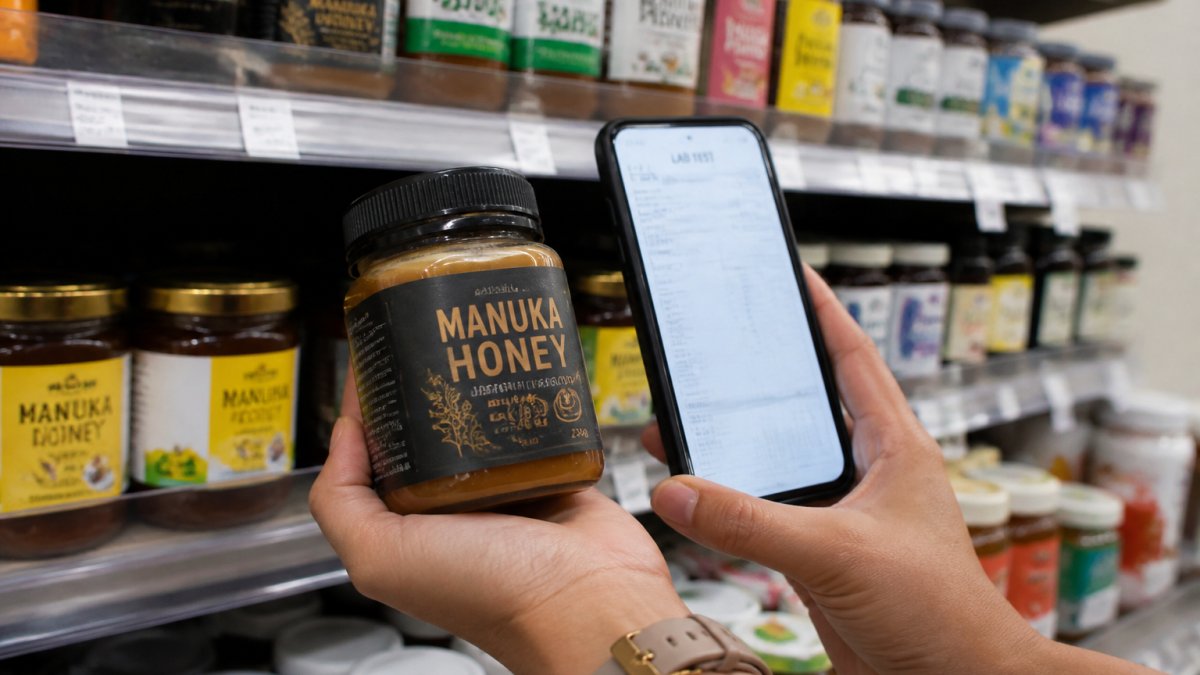
Most articles hand you a checklist and stop there, but counterfeiters read the same checklists. What protects you is understanding why each verification step works, so you can spot fakes that mimic the surface signals.
Why Counterfeiting Is a Structural Problem, Not a Rare One
Manuka honey is expensive because the supply is genuinely limited. The Leptospermum scoparium shrub grows in specific regions, and the flowering window is short. When a product is scarce and commands a premium, blending cheaper honey into it and labeling the result "manuka" becomes economically tempting.
This is not a fringe issue. It is common enough that New Zealand established a formal scientific definition for what counts as authentic manuka.
The Three Tiers of "Manuka" You Will Actually See on a Shelf
Most jars fall into one of three categories:
- Certified monofloral manuka. Carries a UMF or MGO rating, names the producer, and traces back to a batch test. This is the tier most wellness buyers are shopping for.
- Multifloral or blended manuka. Contains manuka nectar mixed with other floral sources. It can be legally sold as manuka, but the MGO level is lower and the price should reflect that.
- "Manuka-style" or unrated honey. Uses the word manuka on the label with no rating, no named producer, or no testing reference. This is where counterfeits live.
The most useful habit you can build is to check which tier a jar belongs to before anything else. A jar with a beautiful label and no rating is not a bargain, it is an unverified product.
Physical Packaging Cues That Separate Real Jars From Fakes
Counterfeiters can copy a logo, but not the details that come from a real testing and licensing process. Look for:
- A specific number, not a word. "Manuka" alone means nothing. "UMF 10+" or "MGO 263+" is a claim that can be checked.
- A named producer with a traceable address. Vague or missing company information is a signal.
- A batch or lot code. This is what lets you look up the actual test result. No batch code means no way to verify.
- Consistent numbers front to back. The UMF on the front and the MGO on the back should track together per the rating table above.
- A realistic price for the rating claimed. A jar priced far below others with the same rating is usually too good to be true.
- A country-of-origin statement that matches the claim. If the label leans on manuka imagery but the origin line points elsewhere, take a second look.
How to Verify a Jar After You Buy It
Verification does not end at the shelf. If a producer publishes lab results, the batch code on your jar should let you pull up the actual test data, the step most buyers skip, and the one that turns a label claim into a confirmed fact.
A quick checklist before you commit:
- Does the label show a specific UMF or MGO number, not just "manuka"?
- Is the producer named and traceable?
- Can you find a batch or lab test reference?
- Does the price seem too low for the rating claimed?
- Does the jar say "monofloral," "blend," or neither?
- Do the front and back numbers track together?
What This Means for Your Wellness Routine
If you are buying manuka honey as a daily food ingredient, the verification steps above are the difference between paying for measurable activity and paying for a picture of a fern. The rating is a quality marker on a food, not a treatment indicator, but it can tell you whether the product inside matches what you thought you were buying.
Manuka Honey Wellness Tonic Recipes You Can Make at Home
A daily manuka tonic is simple to make and easy to adjust to your taste. Try this basic recipe:
- 1 tablespoon manuka honey (UMF 10+ or higher)
- 1 tablespoon organic apple cider vinegar
- 1 cup warm water (not boiling, which can degrade the honey)
- A slice of fresh ginger
- A pinch of turmeric
Stir until the honey dissolves. Sip slowly. For a colder version, use room-temperature water and add ice.
The catch with homemade tonics is consistency, most people make them for a week and then stop. If you want manuka honey and apple cider vinegar without the daily prep, our Bite Me Wellness Tonic blends organic apple cider vinegar with manuka honey, ginger, and turmeric in a smooth shot with no harsh burn.
Contraindications, Side Effects, and Daily Use
Manuka honey is generally well tolerated as a food, but it is still honey, a sugar source that should be used in moderation.
- Infants under 12 months: Do not give any honey, including manuka, due to the risk of infant botulism.
- Blood sugar concerns: Honey affects blood glucose. If you manage diabetes, talk to your healthcare provider about how it fits your diet.
- Allergies: Anyone allergic to bee products should avoid it.
- Portion size: A tablespoon a day is a common approach. More is not better.
If you are pregnant, nursing, or managing a medical condition, check with your doctor before adding any new daily food to your routine.
Sustainability and Environmental Impact of Manuka Honey
Manuka honey's supply is limited by nature: the Leptospermum scoparium shrub grows in specific regions, and the flowering window is short.
Responsible producers manage hives to protect bee health and avoid overharvesting, and some growers invest in land conservation.
Finding a manuka honey you can trust takes more than reading the front of a jar. It takes a certified rating, a traceable producer, and a daily habit you will actually keep.
Frequently Asked Questions
How can I verify if my manuka honey is authentic?
Check the label for a UMF rating (UMF 5+ or higher) or an MGO number, and look for a New Zealand origin statement. Reputable brands publish batch test results on their websites, so you can match the lot number on your jar to a lab report. If a product says only 'manuka blend' or lists no rating, treat it as unverified and skip it.
What is the difference between MGO and UMF ratings?
MGO measures methylglyoxal, the compound tied to manuka honey's antibacterial activity, in milligrams per kilogram. UMF is a broader grading system that also checks leptosperin and DHA to confirm the honey is genuine manuka. A UMF 10+ jar typically shows around MGO 263+, while UMF 15+ runs closer to MGO 514+. UMF is the stricter authenticity check; MGO is the simpler potency number.
Is manuka honey safe for daily consumption?
For most healthy adults, a small daily serving (about 1 teaspoon) is fine as part of a balanced diet. People with diabetes should account for its sugar content, and children under 12 months should never be given honey of any kind due to infant botulism risk.
How should I store manuka honey to maintain its quality?
Keep jars in a cool, dark cupboard at room temperature and tighten the lid after each use. Refrigeration speeds up crystallization, and direct sunlight can degrade the enzymes and antioxidant compounds over time. If your honey crystallizes, place the jar in a bowl of warm water for 10 to 15 minutes; avoid microwaving, which overheats the honey unevenly.