
Daily Wellness Shots Cost Per Serving Comparison
Table of Contents
- What You're Actually Paying Per Serving
- Homemade Wellness Shot Recipes: Real Cost vs. Perceived Savings
- Benefits of Ginger and Turmeric Shots: What the Ingredients Actually Do
- Daily Gut Health Supplement Cost: Shots vs. Capsules vs. Powders
- Long-Term Wellness Shots Cost: The 12-Month View
- Convenience, Quality, and the Price-to-Value Equation
- Which Option Fits Your Routine and Budget?
- Conclusion
Last Updated: August 23, 2026
What You're Actually Paying Per Serving
Most people assume store-bought wellness shots are expensive and homemade is cheap. The reality is more complicated. At Bite Me Wellness Tonic, we've broken down the true cost across every format so you can make an informed decision.
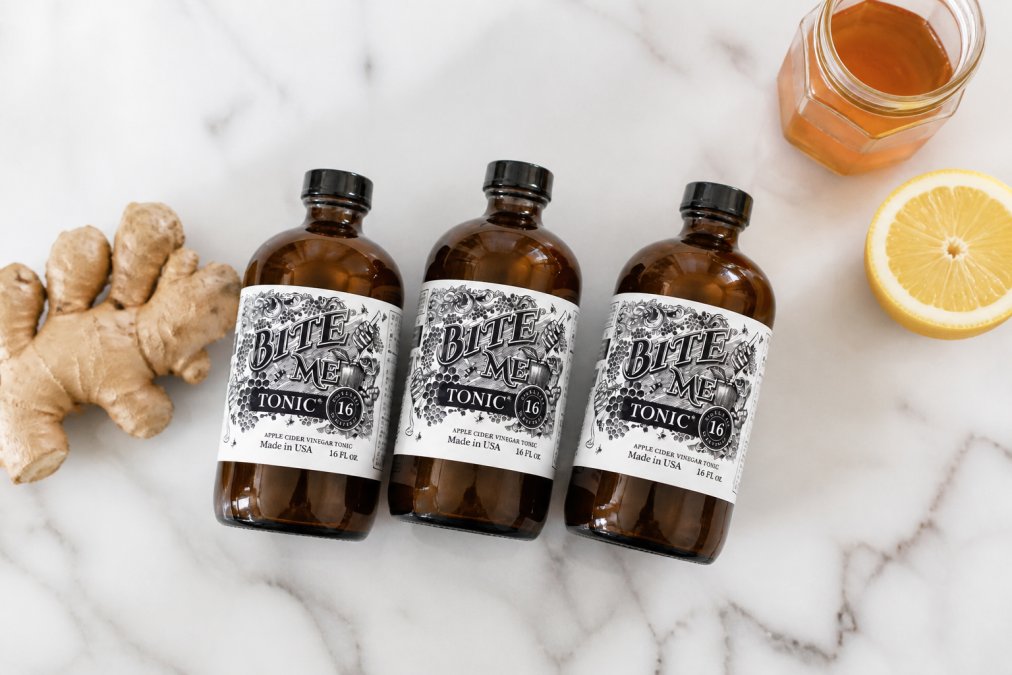
Wellness shots are small-format, concentrated functional beverages designed to deliver a dense hit of micronutrients, antioxidants, and anti-inflammatory compounds in a single serving. A 2-oz shot of cold-pressed ginger and turmeric delivers active compounds differently than a diluted tonic or capsule.
Here is what the cost landscape actually looks like:
| Format | Typical Per-Serving Cost | Shots Per Unit | Notes |
|---|---|---|---|
| Retail single-serve shots | $4.00 - $6.00 | 1 | Highest per-serving cost |
| Ready-to-drink tonics (retail) | $2.50 - $4.00 | Varies | Markup built into shelf price |
| Homemade (ingredients only) | $1.00 - $2.50 | Batch-dependent | Hides equipment and time costs |
| Bite Me Tonic 16-day bottle | $1.56 | 16 | Organic, award-winning, no prep |
| Bite Me 2-pack (32 days) | $1.53 | 32 | Best value for daily routine |
Store-Bought Shots at Retail Markup
Single-serve wellness shots at natural grocery retailers typically cost $4 to $6 each. Buy one daily for a month and you're spending $120 to $180 before considering whether the product works. Retailers build in margin, refrigeration costs, and distribution overhead, so a product with $1.50 worth of organic ingredients easily carries a $5 price tag by the time it reaches the refrigerated case.

Ready-to-Drink Wellness Tonics: Cost Breakdown
Ready-to-drink tonics in multi-serving bottles offer lower per-serving costs than single-serve shots, but only if they use organic ingredients, real Manuka honey, and genuine ginger juice rather than extracts or flavorings.
The Bite Me Tonic 16-day bottle at $24.97 breaks down to $1.56 per serving. The 2-pack at $48.97 brings that to $1.53 per serving for 32 days. For a product made with organic apple cider vinegar, Manuka honey, organic ginger juice, organic lime and lemon juice, cayenne pepper, and turmeric, that cost-effectiveness is difficult to match at retail.
Homemade Wellness Shot Recipes: Real Cost vs. Perceived Savings
Most guides treat homemade wellness shots as the obvious budget winner by focusing only on ingredient costs. A basic ginger-turmeric shot with fresh roots, lemon juice, black pepper, and honey runs roughly $1.00 to $2.50 per serving in organic ingredients. That number looks appealing until you add everything else.
Hidden Costs: Equipment, Time, and Ingredient Waste
A cold-press juicer capable of handling fibrous ingredients costs $150 to $400. Amortized over two years of daily use, that adds $0.20 to $0.40 per serving, a cost most homemade estimates ignore entirely.
Time investment also matters. Batch-making a week's worth takes 30 to 45 minutes per week for preparation, cleaning, and storage. Ingredient waste is the third hidden cost: fresh ginger and turmeric degrade quickly, and many home juicers leave meaningful amounts of active compounds in the pulp rather than the shot.
Storage, Oxidation Loss, and Shelf Life
Fresh-pressed wellness shots have a short shelf life. Without preservatives or pasteurization, a homemade batch typically stays viable for 3 to 5 days. Beyond that, oxidation degrades vitamin C and other heat- and air-sensitive compounds. According to research published by the National Institutes of Health on vitamin C oxidation in fresh juices, vitamin C content in fresh-pressed juices can decline substantially within 24 to 48 hours of preparation.
Shelf-stable formulations maintain their micronutrient profile across the full shelf life. For a daily wellness routine, consistency of nutrient delivery matters as much as the nutrient content itself.
Benefits of Ginger and Turmeric Shots: What the Ingredients Actually Do
The benefits of ginger and turmeric shots are rooted in two well-studied active compounds: gingerol in ginger and curcumin in turmeric. Both function as anti-inflammatory agents with documented effects on digestive function and immune support.
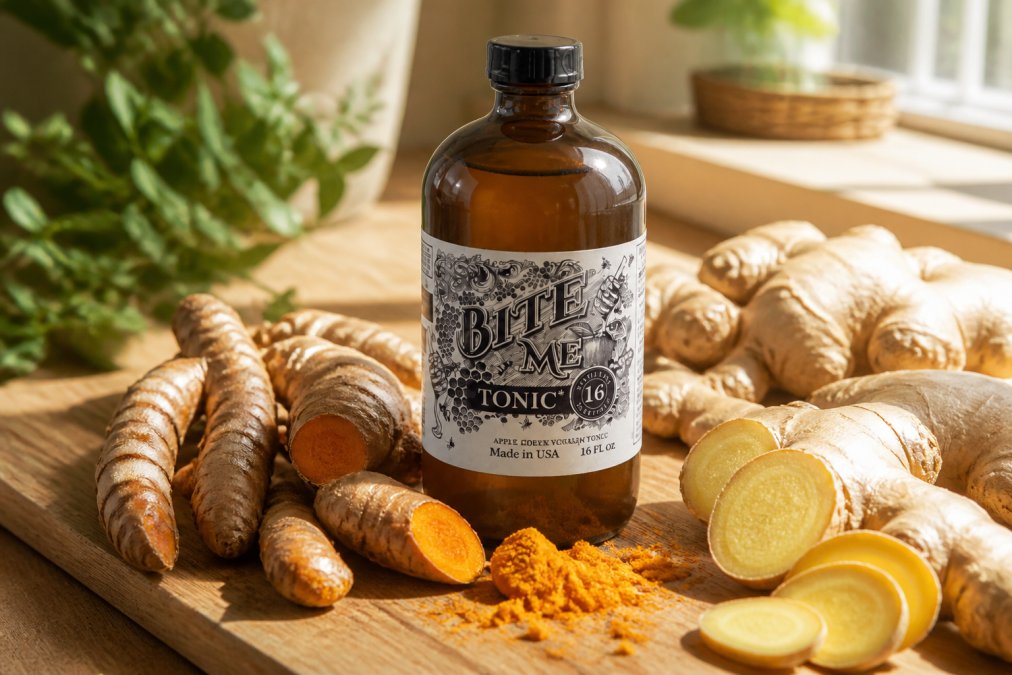
Ginger supports gut motility and has demonstrated anti-inflammatory properties. Turmeric's curcumin works through similar pathways, with particular relevance to systemic inflammation and gut lining integrity. Organic apple cider vinegar contributes acetic acid associated with improved blood sugar response and digestive enzyme activity. Manuka honey adds antimicrobial properties, and lemon, lime, and cayenne support vitamin C intake and circulation.
Bioavailability: Why Ingredient Form Matters
Bioavailability is the percentage of an ingested compound that reaches systemic circulation. Curcumin from turmeric is notoriously difficult to absorb on its own. Black pepper's piperine increases curcumin bioavailability significantly. According to research on piperine and curcumin absorption published in Planta Medica, this combination can substantially enhance curcumin absorption compared to curcumin alone. Bite Me Tonic includes organic black pepper for exactly this reason.
Gingerol from fresh ginger juice is more bioavailable than gingerol from dried ginger powder. Cold-pressed ginger juice preserves the compound in its active form.
Daily Gut Health Supplement Cost: Shots vs. Capsules vs. Powders
Capsule-based gut health supplements typically cost $0.50 to $2.00 per serving but deliver isolated compounds that don't always produce the synergistic effects of whole-food-based ingredients. Powders offer flexibility and competitive pricing but require mixing, and compliance tends to drop when preparation is involved.
Liquid wellness shots have the highest compliance rate of any supplement format because the barrier to use is minimal. For a daily gut health routine, compliance matters more than theoretical efficacy. As documented in consumer supplement adherence research from the Council for Responsible Nutrition, liquid and ready-to-drink formats consistently show higher adherence rates than capsule or powder alternatives.
Long-Term Wellness Shots Cost: The 12-Month View
At $5 per shot from retail, daily use costs $1,825 per year. At $1.56 per serving with Bite Me Tonic's 16-day bottle, the same habit costs roughly $569 annually, a difference of over $1,200 per year.
The homemade route, when fully costed, typically lands between $700 and $1,000 annually once you account for organic ingredients, equipment depreciation, and waste. It's cheaper than retail single-serve shots, but the gap between homemade and a quality ready-to-drink tonic narrows considerably.
The 2-pack option at $48.97 for 32 servings reduces the per-serving cost to $1.53 and covers a full month. Over 12 months, that's approximately $587, with no preparation, no equipment, no oxidation loss, and consistent nutrient delivery.

Convenience, Quality, and the Price-to-Value Equation
Price-to-value ratio isn't just about ingredient cost. It's about what you actually get in the bottle and whether you'll maintain the habit.
A wellness shot made with organic ingredients, Manuka honey sourced from New Zealand, and fresh ginger juice occupies a different quality tier than one made with conventional ingredients and ginger flavoring. Manuka honey is a specific product with a grading system tied to its methylglyoxal content. Bite Me Tonic uses genuine Manuka honey shipped from New Zealand, a meaningful quality distinction.
Taste also affects long-term value. A wellness shot that delivers harsh burn from raw apple cider vinegar is one many people stop taking. Bite Me Tonic's formulation delivers the benefits of organic apple cider vinegar without the throat-stripping experience that puts most people off ACV-based products. That palatability makes daily compliance realistic.
Which Option Fits Your Routine and Budget?
If you have 30 to 45 minutes per week, access to high-quality organic produce, a cold-press juicer, and the discipline to batch-make consistently, homemade wellness shot recipes can deliver a good product at a reasonable fully-loaded cost. The tradeoff is real: time, equipment, and short shelf life.
If you're buying single-serve shots from a retailer, you're paying a significant retail markup. The convenience is real, but cost-effectiveness is poor at scale.
For most people running a daily gut health supplement routine, a quality ready-to-drink tonic like Bite Me Tonic hits the best intersection of cost per serving, ingredient quality, consistency, and compliance. At $1.56 per serving for the 16-day bottle or $1.53 for the 2-pack, it costs less than a coffee and requires no preparation.
| Option | Annual Cost (daily use) | Prep Time | Ingredient Quality Control | Compliance Risk |
|---|---|---|---|---|
| Retail single-serve shots | ~$1,825 | None | Variable | Low |
| Homemade (fully costed) | ~$700-$1,000 | High | You control it | High |
| Bite Me Tonic 2-pack | ~$587 | None | Organic, verified | Very Low |
Daily wellness routines are easy to start and hard to sustain when they involve friction, unpredictable costs, or products that don't taste good enough to drink every day. Bite Me Wellness Tonic was built around solving exactly that problem: a multi-award-winning tonic made with organic apple cider vinegar, real Manuka honey, organic ginger juice, and turmeric, formulated to support gut health and immune function without the burn that makes most ACV products unsustainable. The 2-pack at $48.97 covers a full month at under $1.55 per serving. Shop Bite Me Tonic and make daily wellness something you actually look forward to.
Frequently Asked Questions
Are wellness shots actually worth the cost?
Whether wellness shots are worth it depends on what you're comparing them to. A single cold-pressed shot at a juice bar or retailer can run $3-$5, which adds up to over $1,000 a year. A ready-to-drink tonic like Bite Me Tonic works out to roughly $1.53 per serving when you buy the 2-pack, delivering organic apple cider vinegar, Manuka honey, ginger, and turmeric daily. For consistent supplementation without the prep time, that price-to-value ratio beats most alternatives.
Is it cheaper to make wellness shots at home?
Homemade wellness shots look cheaper on paper, but the full cost is higher than most people expect. Organic ginger, turmeric, apple cider vinegar, and Manuka honey add up quickly, and ingredient waste from batch preparation is common. A cold-press juicer costs $100-$300 upfront. When you factor in equipment depreciation, prep time, and the nutrient degradation that happens within 48-72 hours of pressing, homemade shots often cost more per effective serving than a quality ready-to-drink tonic.
Are turmeric and ginger shots worth the daily investment?
Ginger contains gingerol, a compound with documented anti-inflammatory properties, while turmeric's active compound curcumin supports immune function. Both are well-studied for gut health and immune support. The key factor is bioavailability: curcumin absorbs significantly better when paired with black pepper (piperine), which is why formulations that include both ingredients together deliver more consistent results than taking each separately. Daily use at the right dose makes a measurable difference for most people over several weeks.
How many wellness shots should you take per day?
One shot daily is the standard recommendation for maintenance and ongoing gut health support. During periods of illness or when you need a stronger immune boost, some people take two to three shots per day for a short period. Bite Me Tonic's Wellness Emergency 3-pack is specifically designed for that higher-dose approach, providing 48 shots across three bottles. Consistent daily use over weeks delivers better cumulative results than sporadic higher doses.
This article was written using GrandRanker