
Best Gut Health Drinks for Adults (2026 Guide)
Table of Contents
- Signs of Poor Gut Health You Shouldn't Ignore
- The Best Gut Health Drinks for Adults, Ranked
- Benefits of Ginger and Turmeric Shots for Digestion
- Sugar, Additives, and What Labels Don't Tell You
- DIY vs. Store-Bought Gut Health Drinks: Real Cost Breakdown
- How to Improve Gut Health Naturally with Daily Drinks
- Choosing the Right Gut Health Drink for Your Needs
- Conclusion
Last Updated: August 24, 2026
Poor gut health is one of the most common yet under-addressed health concerns among adults over 40. At Bite Me Wellness Tonic, we work with health-conscious adults dealing with bloating, brain fog, sluggish digestion, and that persistent feeling that something is just off. The gut health drinks category has exploded in recent years, but the quality gap between products is enormous. Below, we rank the best gut health drinks for adults, break down what actually works, and tell you what the label often won't.

Quick Picks:
- Best Overall: Bite Me Wellness Tonic, organic ACV with Manuka honey, ginger, and turmeric in a formula that's actually palatable
- Best for Probiotic Diversity: Kefir, one of the most microflora-rich fermented beverages available
- Best Caffeine-Free Digestive Soother: Ginger tea, gentle, anti-inflammatory, and easy to prepare daily
- Best Fermented Functional Drink: Kombucha, live cultures with a wide flavor range
- Best for Prebiotic Support: Prebiotic fiber drinks, feeds existing gut bacteria rather than adding new ones
Signs of Poor Gut Health You Shouldn't Ignore
Signs of poor gut health include persistent bloating, irregular bowel movements, unexplained fatigue, skin flare-ups, and frequent brain fog. The gut-brain axis connects your digestive system directly to your central nervous system, which is why gut imbalance can show up as mood changes, poor concentration, or low energy just as readily as stomach discomfort.
The gut microbiome is the complex community of trillions of microorganisms living in your digestive tract that regulate digestion, immune response, and metabolic health. When this ecosystem falls out of balance, a condition called dysbiosis, the downstream effects ripple across nearly every system in the body. According to National Institutes of Health overview of the gut microbiome, maintaining microbial diversity is central to overall health outcomes. Dietary intervention is one of the most direct ways to support microbial health through fermented beverages, prebiotic fiber drinks, and anti-inflammatory tonics.
The Best Gut Health Drinks for Adults, Ranked
The gut health drinks market ranges from genuinely functional to glorified sugar water. These five options represent the most evidence-supported, widely available choices for adults looking to support digestive wellness.
1. Apple Cider Vinegar Tonics
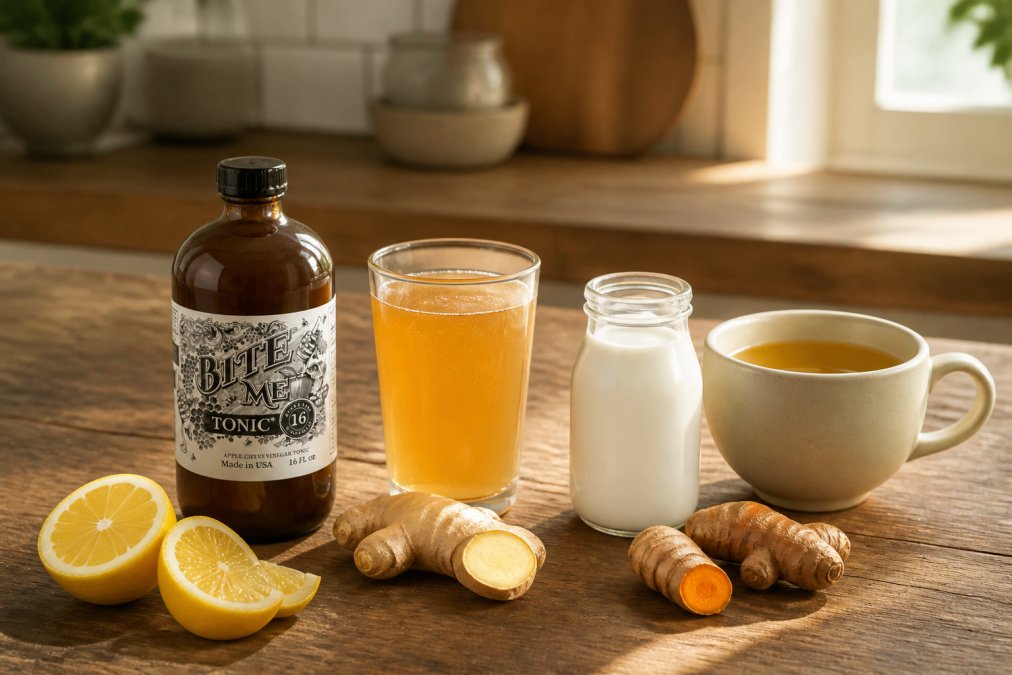
Apple cider vinegar tonics are the best gut health drinks for adults who want a concentrated, daily-dose format that supports digestive regularity, nutrient absorption, and microbial balance without requiring a large serving volume.
Raw, unfiltered apple cider vinegar contains acetic acid and "the mother," a colony of yeast and bacteria formed during fermentation. These organic acids support the gastrointestinal tract by encouraging a more acidic stomach environment, which aids protein digestion and may help crowd out less desirable microorganisms. The challenge is tolerability: raw ACV is harsh on tooth enamel and can cause throat burning.
Bite Me Wellness Tonic combines organic apple cider vinegar with Manuka honey, organic ginger juice, organic lime and lemon juice, cayenne pepper, and turmeric. The result is a smooth, palatable tonic that delivers functional ingredients without the harsh burn. It's a multi-award-winning formula made in the USA, specifically designed for people who've tried raw ACV shots and found them unpleasant.
Pros:
- Concentrated daily dose in a small serving
- Supports digestive enzymes and stomach acid production
- Manuka honey adds antimicrobial properties
- No harsh taste when properly formulated
Cons:
- Still acidic; rinse with water after consuming
- Not suitable as a meal replacement on its own
The Bite Me Tonic 16-day bottle provides 16 daily shots at $24.97, and the 2-pack covers a full 32-day supply for $48.97.

2. Kombucha
Kombucha is a fermented tea drink produced by a symbiotic culture of yeast and bacteria (SCOBY). The fermentation process generates organic acids, B vitamins, and live cultures that support gut microbiome diversity. However, many commercial versions are pasteurized after fermentation, which kills the live cultures that make it functional.
Pros:
- Widely available and palatable for most people
- Supports bacterial diversity when unpasteurized
- Antioxidant-rich from base tea
Cons:
- Sugar content varies significantly by brand
- Pasteurized versions offer minimal probiotic benefit
- Trace alcohol content is a consideration for some adults
Look for "raw" or "unpasteurized" on the label, and check the sugar content.
3. Kefir
Kefir has one of the strongest probiotic profiles of any fermented beverage available and is most likely to produce noticeable changes in digestive regularity within a few weeks of consistent use.
Kefir is a fermented milk drink made by adding kefir grains to milk, producing a tangy, drinkable product with a dense population of probiotic bacteria. Unlike yogurt, kefir typically contains a wider variety of bacterial strains, which supports the bacterial diversity that gut microbiome research consistently links to better metabolic health and immune system support. According to Harvard T.H. Chan School of Public Health overview of fermented foods, fermented dairy products like kefir are among the most studied sources of live cultures in the diet.
Pros:
- High bacterial diversity across multiple probiotic strains
- Supports short-chain fatty acid production
- Dairy-based versions are generally more bioavailable than plant-based alternatives
Cons:
- Not suitable for those with dairy intolerance (though water kefir is an option)
- Taste is an acquired preference for many adults
- Requires refrigeration and has a short shelf life
4. Prebiotic Fiber Drinks
Most gut health conversations focus on adding probiotic bacteria. The smarter question is whether you're feeding the bacteria you already have.
Prebiotic fiber drinks are formulated with soluble fibers such as inulin, chicory root, or partially hydrolyzed guar gum. These ingredients pass into the large intestine and serve as food for existing beneficial bacteria. The fermentation of prebiotic fiber by gut bacteria produces short-chain fatty acids, particularly butyrate, which maintains the gut lining and reduces inflammatory signaling.
Pros:
- Directly feeds beneficial microflora rather than adding external bacteria
- Supports digestive regularity through fiber
- Sugar-free alternatives are widely available
Cons:
- Can cause temporary bloating when introduced too quickly
- Does not replace probiotic sources for those with significant dysbiosis
Start with a small serving and increase gradually over two weeks.
5. Ginger Tea
Ginger tea is the most underrated gut health drink on this list. It doesn't carry the probiotic profile of kefir or the fermentation credentials of kombucha, but for acute digestive discomfort, bloating relief, and anti-inflammatory support, it outperforms almost everything else.
Ginger contains bioactive compounds, primarily gingerols and shogaols, that have well-documented anti-inflammatory properties and support gastric motility, helping food move through the digestive system more efficiently. This makes ginger tea particularly effective for post-meal bloating, nausea, and sluggish digestion.
Pros:
- Fast-acting for bloating relief and nausea
- Anti-inflammatory properties support gut lining health
- Caffeine-free and widely accessible
- Easy to prepare fresh or use as a bagged tea
Cons:
- Does not provide live cultures or prebiotic fiber
- Fresh ginger preparation takes time
- May interact with blood-thinning medications at high doses
Benefits of Ginger and Turmeric Shots for Digestion
Ginger supports digestive enzymes and promotes gastric emptying, reducing the likelihood of food sitting in the stomach and fermenting, a primary cause of bloating and gas. Turmeric's active compound, curcumin, is one of the most studied anti-inflammatory agents in the natural foods space. The challenge with curcumin is bioavailability: it's poorly absorbed on its own. Black pepper, specifically piperine, increases curcumin absorption significantly. The Bite Me Wellness Tonic formula includes both turmeric and organic black pepper for exactly this reason.
As documented in National Center for Complementary and Integrative Health overview of turmeric, curcumin's anti-inflammatory properties have been the subject of substantial research, though bioavailability remains the central variable in how effective any given formulation will be. The practical benefit of ginger and turmeric shots is consistency: a ready-to-drink shot format removes the barrier of daily preparation.
Sugar, Additives, and What Labels Don't Tell You
Many commercial gut health drinks are marketed on the strength of one functional ingredient while quietly carrying a sugar load that undermines the entire premise. A drink that supports probiotic bacteria while feeding pathogenic bacteria with excess sugar is counterproductive for adults dealing with candida overgrowth, blood sugar instability, or metabolic health concerns.
What to check on any gut health drink label:
- Total sugars per serving: Aim for under 5g for a daily functional drink.
- Added sugars vs. naturally occurring: Fermentation consumes some sugar, but brands sometimes add more post-fermentation for taste.
- Natural sweeteners: Stevia or monk fruit are preferable to high-fructose corn syrup or cane sugar in a gut health context.
- Hidden FODMAPs: Some wellness products contain inulin, chicory, or fructooligosaccharides that can trigger bloating in people sensitive to onion and garlic.
- Preservatives: Sodium benzoate and potassium sorbate are common in shelf-stable drinks and may affect gut microflora at high concentrations.
The FDA food labeling regulations provide the framework, but reading labels critically is the consumer's responsibility.
DIY vs. Store-Bought Gut Health Drinks: Real Cost Breakdown
The conventional wisdom is that making your own tonics at home saves money. The reality is more complicated.
| Option | Estimated Cost Per Day | Time Investment | Consistency Factor | Shelf Life |
|---|---|---|---|---|
| Bite Me Tonic (16-day bottle) | ~$1.56/day | None | Ready to drink | Shelf-stable |
| Bite Me Tonic (32-day 2-pack) | ~$1.53/day | None | Ready to drink | Shelf-stable |
| DIY ACV + honey + ginger tonic | ~$1.20-$2.00/day | 10-15 min daily | Variable | Refrigerate, use within 3-5 days |
| Specialty grocery wellness shot | ~$3.50-$5.00/shot | None | Convenient | Refrigerated, short shelf life |
| Fresh kombucha (home brew) | ~$0.50-$1.00/day | 2-4 weeks per batch | High effort | Refrigerate, 2-4 weeks |
DIY calculations often ignore ingredient sourcing. Genuine Manuka honey is one of the most counterfeited food products globally. The Bite Me Wellness Tonic uses authentic Manuka honey sourced from New Zealand, which is a meaningful cost driver but also a meaningful quality differentiator. The other factor DIY calculations ignore is consistency: a tonic you have to prepare fresh every day gets skipped on busy mornings. Convenience is not a luxury feature in a daily wellness habit, it's the difference between a habit that sticks and one that doesn't.
For adults who want the experience of a fresh daily tonic without the preparation, the 30 Day Bloat Reset Guide ($7.00) pairs with the tonic to create a structured 30-day habit framework, including a 7-day meal plan and daily check-ins.

How to Improve Gut Health Naturally with Daily Drinks
No single drink improves gut health alone. Gut health drinks work best as part of a broader dietary pattern that includes fiber-rich whole foods, adequate hydration, and reduced ultra-processed food consumption.

Daily drinks create a consistent delivery mechanism for functional ingredients that many adults struggle to get from food alone.
Timing and Temperature: When and How to Drink Them
Timing affects how well gut health drinks perform. ACV tonics and ginger shots work best taken 15-30 minutes before a meal, when they can prime digestive enzyme activity and support stomach acid levels before food arrives. Probiotic drinks like kefir are often better tolerated with or after a meal, when stomach acid levels are somewhat buffered by food.
Temperature matters more than most people realize. Boiling water kills probiotic bacteria, which is why adding live culture products to hot drinks defeats the purpose. Ginger tea is the exception: heat activates some of ginger's bioactive compounds, making a warm brew more effective than a cold one for digestive motility. For kombucha and kefir, serve cold or at room temperature.
A practical daily structure:
- Morning (before breakfast): ACV tonic or ginger shot
- With lunch: Kombucha (unpasteurized) or prebiotic fiber drink
- Evening: Ginger or turmeric tea to support overnight gut motility
Contraindications and Side Effects to Know
Gut health drinks are not universally safe for everyone.
Apple cider vinegar: Erodes tooth enamel with repeated direct contact. Always rinse with water after consuming. Contraindicated at high doses for people on insulin or diuretics due to potassium interactions.
Kombucha: Contains trace alcohol from fermentation, typically under 0.5%. Not appropriate for pregnant women, individuals in alcohol recovery, or children without medical guidance.
Kefir: Dairy-based kefir is not appropriate for those with lactose intolerance or dairy allergies. Water kefir can cause significant bloating in those with SIBO (small intestinal bacterial overgrowth).
Prebiotic fiber drinks: Can cause significant gas and bloating when introduced too quickly, particularly in people with IBS.
Ginger: Generally safe, but high doses may interact with anticoagulant medications including warfarin.
Choosing the Right Gut Health Drink for Your Needs
The right gut health drink depends on your primary symptom, your lifestyle, and your tolerance for preparation time.
| Symptom / Goal | Best Drink | Why |
|---|---|---|
| Bloating after meals | Ginger or ACV tonic | Supports gastric motility and digestive enzyme activity |
| Irregular digestion | Kefir | High probiotic diversity supports regularity |
| General gut microbiome support | Kombucha (unpasteurized) | Live cultures and organic acids |
| Feeding existing gut bacteria | Prebiotic fiber drink | Directly fuels short-chain fatty acid production |
| Daily convenience, no prep | Bite Me Wellness Tonic | Ready-to-drink, palatable, multi-functional ingredients |
| Onion/garlic sensitivity | Bite Me Wellness Tonic | Contains no FODMAPs from allium sources |
| Dislike of raw ACV taste | Bite Me Wellness Tonic | Formulated to eliminate the harsh burn |
A common mistake is choosing a gut health drink based on what's trending rather than what matches your specific digestive pattern. The most consistent result comes from pairing a daily ACV tonic with a fiber-rich diet. The tonic handles the functional ingredient delivery; the diet provides the substrate that gut bacteria need to thrive. For adults who've tried multiple approaches without lasting results, the issue is often consistency rather than product selection. A drink you actually enjoy taking every day will always outperform a more "optimal" drink you abandon after two weeks.
Persistent bloating, brain fog, and digestive discomfort don't have to be the baseline. Bite Me Wellness Tonic was developed specifically for adults who want the functional benefits of organic apple cider vinegar, Manuka honey, ginger, and turmeric in a formula that's smooth enough to actually take every day. It's multi-award-winning, made in the USA with organic ingredients, and formulated without the harsh burn that stops most ACV habits before they start. Shop Bite Me Wellness Tonic and start your 30-day reset.
Frequently Asked Questions
What is the best drink to improve gut health?
No single drink works for everyone, but the most consistently effective gut health drinks for adults include apple cider vinegar tonics, kombucha, and kefir. Each supports the gut microbiome differently: ACV tonics introduce organic acids that aid digestion, kombucha delivers live cultures from fermentation, and kefir provides a dense probiotic profile. The best choice depends on your digestive sensitivities, taste preferences, and how well you tolerate fermented beverages. A daily ACV tonic like Bite Me Wellness Tonic is a practical starting point for most adults.
What should I drink first in the morning for gut health?
Drinking an apple cider vinegar tonic or warm ginger-based shot before eating is a common approach that many adults find supports digestive regularity throughout the day. The organic acids in ACV may help prime digestive enzymes before your first meal, while ginger has well-documented anti-inflammatory properties that soothe the gastrointestinal tract. Avoid drinking kombucha or kefir on a completely empty stomach if you're new to fermented beverages, as the live cultures can cause initial bloating until your gut microbiome adjusts.
How do ginger and turmeric shots support digestion?
Ginger contains compounds called gingerols that support digestive motility and help relieve bloating and nausea. Turmeric's active compound, curcumin, has anti-inflammatory properties that may reduce irritation along the gastrointestinal tract. Together, they support nutrient absorption and microflora balance. Bioavailability is a key consideration: pairing turmeric with black pepper (piperine) significantly increases curcumin absorption. Bite Me Wellness Tonic includes both organic ginger juice and turmeric alongside black pepper specifically for this reason.
Are probiotic drinks effective for long-term gut health?
Probiotic drinks can support bacterial diversity and digestive wellness over time, but consistency matters more than the specific product. Clinical evidence suggests that regular intake of fermented beverages with live cultures helps maintain a balanced gut microbiome, which in turn supports immune system function and metabolic health. However, probiotic drinks work best as part of a broader dietary intervention that includes prebiotic fiber from whole foods. Relying on one drink alone without addressing diet and lifestyle typically produces limited long-term results.
What are the signs of an unhealthy gut?
Common signs include persistent bloating, irregular bowel movements, excessive gas, food intolerances (especially to onion, garlic, or high-FODMAP foods), fatigue after eating, skin issues, and brain fog. The gut-brain axis means poor gut health often shows up as mood changes or difficulty concentrating, not just digestive discomfort. If you experience several of these symptoms regularly, your gut microbiome may be out of balance. Starting with a low-irritant, natural gut health drink and tracking your symptoms over 30 days can help you identify patterns.
This article was written using GrandRanker