
Dairy-Free Probiotic Alternatives: A 2026 Guide
Table of Contents
- Why People Seek Dairy-Free Probiotic Alternatives
- Non-Dairy Probiotic Foods: Fermented Vegetables and Beyond
- Dairy-Free Probiotic Drinks: Water Kefir, Kombucha, and More
- How to Get Probiotics Without Dairy: Practical Selection Criteria
- Common Mistakes When Choosing Dairy-Free Probiotic Options
- Safety and Food Handling for Homemade Fermented Foods
- Frequently Asked Questions
Last Updated: October 8, 2026
Why People Seek Dairy-Free Probiotic Alternatives
Many people turn to dairy-free probiotic alternatives because they need probiotics but can't or won't consume dairy. Lactose intolerance, milk allergies, vegan diets, and preference all drive this search, and options beyond yogurt and kefir are plentiful.
If dairy isn't part of your diet, you need to know where else to find probiotics.
The real challenge isn't finding dairy-free sources, it's finding ones that actually contain live cultures and deliver what the label promises. Many products claim probiotics but lack enough active cultures to matter, hide allergens, or taste terrible.
This guide covers the best non-dairy probiotic foods and drinks, how to verify what you're buying, and common mistakes to avoid.
Non-Dairy Probiotic Foods: Fermented Vegetables and Beyond
Fermented vegetables are your easiest entry point to non-dairy probiotics. These foods go through natural fermentation, which creates live cultures without any dairy involved.
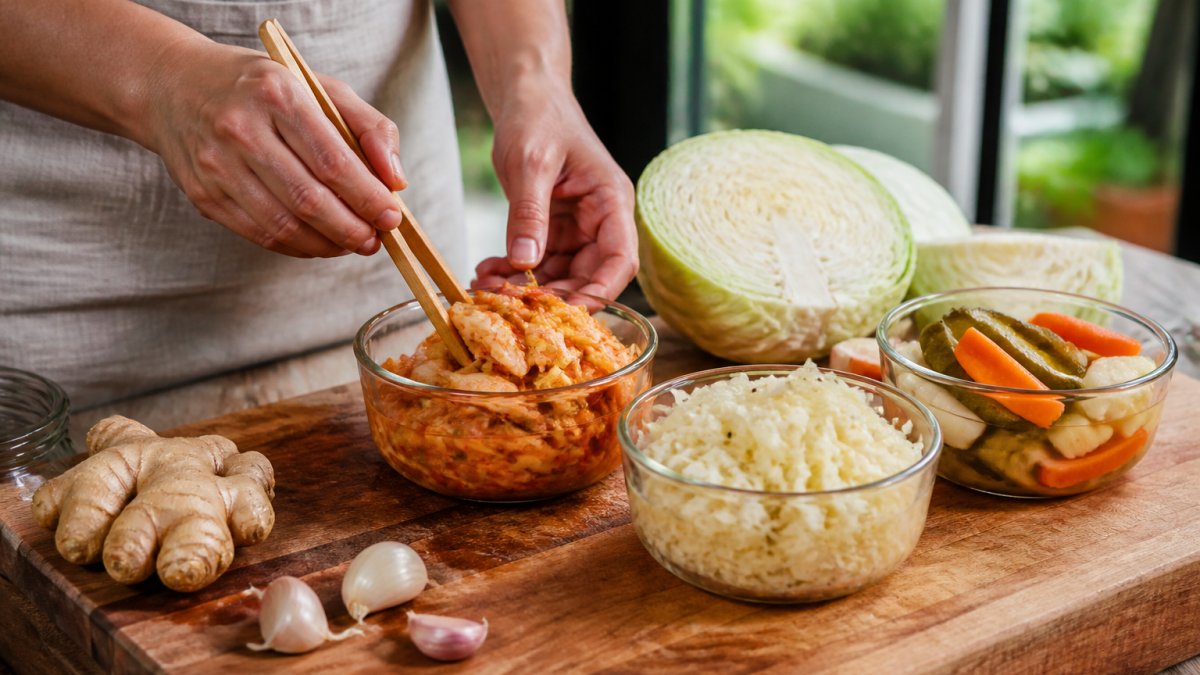
Fermented Vegetables: Kimchi, Sauerkraut, and Pickles
Fermented vegetables are preserved through natural fermentation, which creates beneficial bacteria and live cultures without dairy.
Sauerkraut is shredded cabbage fermented in saltwater, where beneficial bacteria multiply over weeks into a tangy, crunchy food loaded with live cultures.
Kimchi works the same way but adds spices, garlic, and chili peppers for a spicier, more complex flavor.
Pickles made with saltwater fermentation (not vinegar) also contain probiotics. Look for "fermented" or "naturally fermented" on the label, vinegar-based pickles are heat-processed, which kills live cultures.
What to look for:
- "Fermented" or "naturally fermented" on the label
- No pasteurization (heat kills the live cultures)
- Salt as the main preservative
- Kept in the refrigerated section
Start with small amounts. A serving or two a day is plenty. Your digestive system needs time to adjust to new foods.
Fermented Soy: Tempeh and Miso
Tempeh and miso are fermented soy foods. Soy is a legume, not dairy, so both fit perfectly into dairy-free diets.
Tempeh is whole soybeans bound into a firm cake. Fermentation makes it easier to digest than tofu, and its texture makes it more satisfying, slice, marinate, and cook it like meat.
Miso is fermented soybean paste. A spoonful adds salty, umami-rich flavor to soups, dressings, and marinades.
Both contain live cultures from fermentation and work as plant-based non-dairy probiotic foods.
How to use them:
- Tempeh: slice, pan-fry, and add to bowls or sandwiches
- Miso: stir into warm water for a quick broth, or add to salad dressings
- Start small, miso is salty, and your body needs adjustment time
Dairy-Free Probiotic Drinks: Water Kefir, Kombucha, and More
Fermented drinks give you probiotics in liquid form, convenient and often tastier than fermented vegetables if you're new to this. But the differences between products matter more than the marketing on the bottle.
Water Kefir and Kefir Grains
Water kefir is kefir made without dairy: kefir grains ferment sugar water into a fizzy, slightly sweet drink with live cultures.
Kefir grains aren't actually grains, they're clusters of bacteria and yeast. Add them to sugar water, ferment 24 hours, strain, drink the liquid, and reuse the grains for the next batch.
Water kefir is milder and slightly sweeter than dairy kefir, making it easier to drink regularly.
The practical side:
- Kefir grains are a one-time purchase
- Each batch costs just the sugar and water
- You need to feed the grains regularly or refrigerate them
- Takes about 24 hours per batch
If you want dairy-free kefir without the DIY hassle, some brands sell ready-made water kefir in bottles.
Kombucha and Fermented Tea
Kombucha is sweetened tea fermented with a SCOBY (symbiotic culture of bacteria and yeast), creating carbonation, acidity, and live cultures.
Store-bought kombucha comes in many flavors, tastes tangy and slightly sweet, and works well as a soda replacement.
Homemade kombucha is cheaper but requires a SCOBY and patience; fermentation takes 7-30 days depending on tanginess.
Key points:
- Kombucha contains trace amounts of caffeine from the tea
- It's naturally carbonated from fermentation
- Flavor varies widely between brands
- Start with small amounts, the acidity can upset sensitive stomachs
Plant-Based Yogurt and Coconut Milk Alternatives
Plant-based yogurts made from coconut, almond, soy, or oat milk can contain live cultures, but not all do, and those that do vary widely.
There are two distinct categories, and the difference matters:
1. Fermented plant-based yogurts. A starter culture is added to plant milk and left to ferment, creating live cultures naturally. Examples include coconut and soy milk yogurts made with live active cultures.
2. Fortified plant-based yogurts. A yogurt-like base is produced, then probiotic strains are added afterward. These cultures aren't created through fermentation, and the CFU count at consumption is often lower than the label states.
What to look for on the label:
- "Live cultures" or "active cultures", not just "probiotic"
- Strain names (genus, species, and strain number if available)
- CFU count (colony-forming units) and the date the count was measured
- Refrigerated vs. shelf-stable, refrigerated versions usually have more viable cultures
- Whether the product is fermented or fortified
Coconut milk yogurt is creamy, soy milk yogurt is protein-rich, oat milk yogurt is mild and slightly sweet, and almond milk yogurt is thinner and lower in protein.
Dietary suitability notes:
- Soy yogurt is a good option if you're avoiding dairy but not soy
- Coconut yogurt is suitable for soy-free, nut-free, and gluten-free diets
- Oat yogurt may contain gluten unless labeled gluten-free
- Almond yogurt is not suitable for nut allergies
- Check for added sugar, many flavored plant yogurts contain more sugar than a serving of fruit
These are convenient if you want something spoon-able, but they're often less potent than fermented vegetables or water kefir.
How to Get Probiotics Without Dairy: Practical Selection Criteria
Choosing the right dairy-free probiotic option means knowing what to look for on labels and understanding what actually matters.
Verifying Live Cultures and Probiotic Viability
The biggest mistake is assuming a product has live cultures just because the label says "probiotic."
Live cultures need the right temperature, pH, and time, and many products lose them during shipping, storage, or shelf time.
How to check:
- Look for "live cultures," "active cultures," or "living cultures" on the label
- Check the expiration date, cultures die over time
- Refrigerated products usually have more viable cultures than shelf-stable ones
- If a product doesn't list cultures on the label, assume it doesn't have them
For homemade fermented foods, the cloudiness or sediment at the bottom is often a sign of live cultures. Clear, filtered products may have fewer.
Taste is another clue. Real fermented foods taste tangy or sour. This acidity is a byproduct of fermentation. If a product tastes sweet and smooth, fermentation may have been minimal.
Reading Labels for Strain-Specific Evidence
Different probiotic strains do different things.
A label that just says "probiotics" tells you almost nothing; one that lists specific strains, like Lactobacillus plantarum or Bifidobacterium longum, gives you real information.
What to look for:
- Strain names (genus, species, and strain number if available)
- CFU count (colony-forming units, a measure of live cultures)
- A date that shows when the cultures were counted
If a label lists no strains, no CFU count, and no date, you're buying on faith alone. That's fine for fermented vegetables, where fermentation itself is the point. But for packaged products claiming specific probiotic benefits, strain information matters.
Checking for Hidden Allergens and Dietary Sensitivities
Many dairy-free probiotic products hide common allergens. Onion, garlic, soy, nuts, and gluten are common culprits.
If you have sensitivities, read the full ingredient list, not just the "allergen statement." Onion powder or garlic powder may not be listed as allergens but can still trigger reactions.
Fermented vegetables often contain garlic and onion. If those are triggers, homemade fermented foods may be your best bet since you control every ingredient.
For store-bought products, call the manufacturer if the label is unclear.
Red flags:
- Vague ingredient lists
- "Natural flavors" without specification
- No allergen statement
- Unclear fermentation methods
Common Mistakes When Choosing Dairy-Free Probiotic Options
Most people make one of a few predictable mistakes when switching to dairy-free probiotics. Avoiding them saves money, digestive discomfort, and wasted effort.
Mistake 1: Buying pasteurized products. Heat kills live cultures. If a product has been pasteurized after fermentation, it has no living probiotics.
Mistake 2: Assuming all fermented foods taste bad. Fermented vegetables can be tangy without being harsh.
Mistake 3: Starting too much, too fast. Large amounts of fermented foods can cause bloating, gas, or digestive discomfort.
Mistake 6: Overlooking storage and handling. Heat, light, and time reduce the viability of live cultures.
Bite Me Wellness Tonic offers a delicious, all-natural way to nurture your gut health and boost your immune system, helping you feel vibrant from the inside out. Crafted with organic apple cider vinegar, Manuka honey, ginger, and turmeric, our unique blend provides a smooth, delicious taste without any harsh burn, making daily wellness a truly enjoyable experience. We're here to support anyone looking to address those "off" feelings due to poor gut health, empowering you to embrace overall well-being with every sip.
Safety and Food Handling for Homemade Fermented Foods
If you make your own fermented foods, safety matters.
Temperature: Most fermented vegetables need room temperature (around 68-72°F). Too cold stalls fermentation; too hot encourages unwanted bacteria.
Cleanliness: Use clean jars and utensils. Fermentation creates an acidic environment that prevents harmful bacteria, but don't start with contamination.
Salt: Salt is essential. It draws out liquid and creates the right environment for beneficial bacteria. Use non-iodized salt.
Submerged: Vegetables must stay below the brine, since air exposure allows mold to grow.
Taste test: Fermented foods should taste tangy and sour. If they smell rotten or look moldy, throw them away.
Storage: Once fermented, move jars to the refrigerator. Cold slows fermentation and extends shelf life, most fermented vegetables keep for months.
Choosing dairy-free probiotic sources doesn't mean settling for less. Bite Me Wellness Tonic offers another approach, a ready-to-drink blend with organic apple cider vinegar, Manuka honey, ginger, and turmeric that supports gut health and the immune system without the harsh burn or complicated fermentation process.
Frequently Asked Questions
What is the best dairy-free probiotic source?
The best dairy-free probiotic source depends on your preferences and dietary needs. Fermented vegetables like sauerkraut and kimchi are accessible and affordable. Water kefir and kombucha offer convenient drinkable options. Plant-based yogurts made from coconut or almond milk provide familiar formats. Look for products with live cultures listed on the label, avoid added sugars when possible, and choose options that fit your taste preferences, consistency matters more than perfection.
How can I tell whether a probiotic product contains dairy?
Check the ingredient list for milk, whey, casein, or lactose. Many plant-based yogurts and fermented drinks are clearly labeled dairy-free, but some products use whey-based cultures or add milk derivatives. Review allergen statements at the bottom of labels, which must disclose milk-based ingredients. When buying fermented foods, ask producers directly about their culturing methods, some use dairy-based starter cultures even if the final product contains minimal lactose.
Are all fermented foods naturally probiotic?
Not all fermented foods contain live, active probiotics. Fermentation creates beneficial bacteria, but heat processing, pasteurization, or long storage can kill live cultures. Look for labels stating 'live and active cultures' or 'contains live probiotics.' Unpasteurized fermented vegetables and refrigerated kombucha are more likely to retain active cultures than shelf-stable versions. When in doubt, check the label or ask the producer whether their product contains viable probiotic strains.
Can people with lactose intolerance eat fermented foods?
Many fermented foods are naturally low in lactose because bacteria consume the lactose during fermentation. Fermented dairy products like aged cheeses and yogurt are often tolerated better than fresh milk. However, dairy-free fermented options like sauerkraut, kimchi, water kefir, and kombucha eliminate lactose entirely, making them safer choices for those with lactose intolerance. Always check labels and start with small portions to assess your individual tolerance.