
Easy Homemade Wellness Tonics for Kids: 7 Recipes
Table of Contents
- Why Make Wellness Tonics for Kids at Home
- Homemade Immunity Shots for Kids: A Gentle Ginger-Lemon Base
- Kid-Friendly Herbal Drinks That Taste Mild, Not Medicinal
- Low-Sugar Drinks for Kids: Sweetening Without the Sugar Crash
- Fruit-Infused Water for Kids: Colorful, Simple, and Refreshing
- Age-Specific Safety, Serving Sizes, and When to Check With a Doctor
- Batch Prep, Storage, and Common Mistakes to Avoid
- Frequently Asked Questions
Last Updated: October 14, 2026
Why Make Wellness Tonics for Kids at Home
Making easy homemade wellness tonics for kids at home gives you full control over what goes into the cup.
A wellness tonic is a drink made from fresh ingredients like fruit, herbs, ginger, or honey that people use to support everyday hydration and general well-being.
That distinction matters. A lot of online recipes promise more than a drink can deliver.
Here is what most guides get wrong: they push strong ginger and citrus shots at children without mentioning serving sizes, allergies, or age limits.
What You'll Need Before You Start
Gather a few basics first. You will use them across every recipe .
- A blender or fine grater
- A fine mesh strainer
- Small cups or shot glasses
Wash everything before you begin. Rinse fruit under cool running water, even if you plan to peel it.
Homemade Immunity Shots for Kids: A Gentle Ginger-Lemon Base
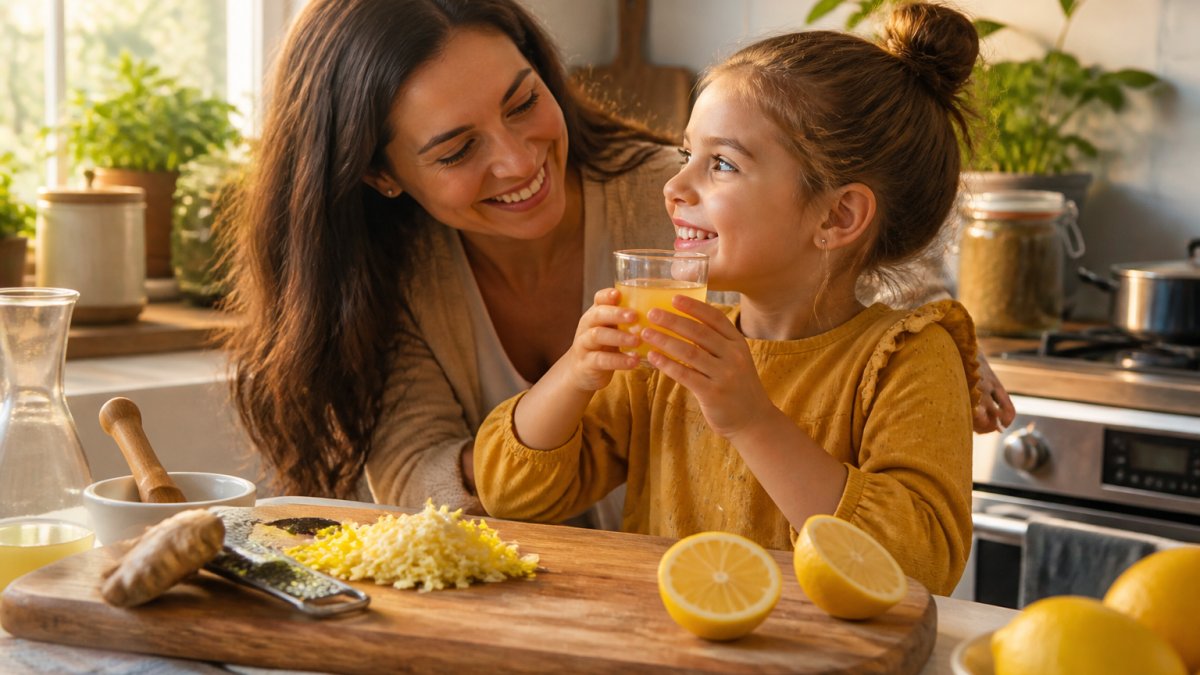
Homemade immunity shots for kids work best when the ginger is mild and the lemon is balanced with something sweet. A full-strength adult shot is too harsh for most children.
This base makes four small servings.
Ingredients:
- 1-inch piece of fresh ginger, peeled
- Juice of 1 lemon
- 1 teaspoon honey
Step-by-Step Preparation
- Grate the ginger finely into a bowl.
- Squeeze the lemon juice over the ginger.
- Add the honey and water.
- Stir until the honey dissolves.
- Strain into a small cup.
- Chill for 10 minutes before serving.
One serving is about two tablespoons for younger children and a quarter cup for teens. Dilute with extra water if the taste is still strong.
Kid-Friendly Herbal Drinks That Taste Mild, Not Medicinal
Kid-friendly herbal drinks should taste like a light tea, not a cough syrup. The trick is a short steep time, a mild herb, and a small serving.
Chamomile, peppermint, and lemon balm are the three easiest starting points. All three have soft flavors that children tend to accept, and all three are widely available as loose leaf or tea bags at grocery stores.
Simple Herbal Infusions to Try
- Chamomile and apple: Steep one chamomile tea bag in 1 cup of hot (not boiling) water for 3 minutes. Remove the bag, cool completely, then stir in 2 tablespoons of unsweetened apple juice.
- Peppermint and honey: Steep 5 to 6 fresh mint leaves in 1 cup of hot water for 2 minutes. Strain, cool to room temperature, then add 1 teaspoon of honey for children over 12 months.
- Lemon balm and peach: Steep 1 teaspoon of dried lemon balm in 1 cup of hot water for 3 minutes, strain, and blend with 2 to 3 slices of ripe peach. Strain again if your child dislikes texture.
Caffeine and Herb Cautions
Not every herbal tea is a good fit for children. Black tea, green tea, and matcha all contain caffeine, which most pediatric guidance suggests limiting for young children. Stick to caffeine-free options like chamomile, peppermint, lemon balm, and rooibos.
A few herbs are best avoided for children unless a pediatrician says otherwise. These include licorice root, St. John's wort, and any herbal blend marketed for adults.
Serving Sizes by Age
Herbal drinks are best treated as a small taste, not a replacement for water or milk.
- Under 12 months: Skip herbal drinks. Offer breast milk, formula, or plain water only.
- Ages 1 to 3: 1 to 2 tablespoons, cooled and diluted with water if the flavor is strong.
- Ages 4 to 8: 2 to 4 tablespoons.
Always cool warm infusions before serving to children. Test the temperature on your wrist first, it should feel neutral, not warm.
Storage for Herbal Drinks
Brewed herbal drinks keep in a sealed container in the refrigerator for up to 3 days. Label the container with the brew date. Discard anything that smells off, looks cloudy, or has been sitting out at room temperature for more than 2 hours.
The USDA guidance on food safety for children recommends keeping prepared drinks refrigerated and using them within a short window.
Low-Sugar Drinks for Kids: Sweetening Without the Sugar Crash
Low-sugar drinks for kids do not have to taste plain. You just need sweeteners that carry flavor along with sweetness.
Ripe fruit does most of the work. A soft banana or a sweet strawberry adds natural sugar without the sharp spike of a soda.
Better sweetener options:
- Mashed ripe banana
- Unsweetened applesauce
- A small amount of honey, for children over 12 months
Start with half the sweetener a recipe calls for. You can always add more, but you cannot take it out.
| Sweetener | Amount to Start With | Best For | Watch Out For |
|---|---|---|---|
| Ripe banana | 1/2 mashed | Smoothies, shots | Browns quickly |
| Applesauce | 1 tablespoon | Herbal drinks | Adds thickness |
| Honey | 1 teaspoon | Citrus drinks | Not for under 12 months |
| Cinnamon | A pinch | Fruit water, infusions | Strong if overused |
Fruit-Infused Water for Kids: Colorful, Simple, and Refreshing
Fruit-infused water for kids is the easiest tonic on this list. You drop fruit into water, chill it, and serve. No blender, no strainer, no cleanup.
It also gets children drinking more plain water, which is the real goal.
Flavor Combinations Kids Actually Ask For
- Strawberry and mint
- Orange and blueberry
- Green apple and cinnamon stick
Let the pitcher sit in the fridge for at least 30 minutes. Two hours gives a stronger flavor.
For a fizzy version, use sparkling water instead of still water. Add the fruit after pouring so the bubbles stay.
Age-Specific Safety, Serving Sizes, and When to Check With a Doctor
Serving sizes change a lot with age. A drink that suits a teenager can be too strong for a toddler.
General serving guidance:
- Under 12 months: water and breast milk or formula only. Skip tonics and honey.
- Ages 1 to 3: 1 to 2 tablespoons of a diluted tonic
- Ages 4 to 8: 2 to 4 tablespoons
These are starting points, not rules. Every child is different.
Talk with your child's doctor before introducing any new tonic if your child has a chronic condition, takes medication, or has a history of reactions to foods.
When to stop and call a doctor:
- A rash, swelling, or trouble breathing after trying a new ingredient
- Stomach pain, vomiting, or diarrhea that does not settle
- Any reaction that worries you
Stop the drink and seek care. Do not wait to see if it passes.
Batch Prep, Storage, and Common Mistakes to Avoid
Batch prep saves time, but fresh tonics do not keep forever. The shelf life depends on what is in the drink, so plan around the shortest-lived ingredient rather than the longest.
Shelf Life by Tonic Type
| Tonic Type | Fridge Life | Freezer-Friendly? | Notes |
|---|---|---|---|
| Ginger-lemon base | Up to 3 days | Yes, in ice cube trays | Stir before serving; natural separation is normal |
| Herbal infusions | Up to 3 days | Yes, as ice cubes | Discard if cloudy or off-smelling |
| Fruit-infused water | 12 to 24 hours | No | Strain fruit out after 12 hours to prevent bitterness |
| Fruit smoothie-style tonics | Up to 2 days | Yes, in sealed pouches | Shake well; texture changes after freezing |
| Electrolyte-style drinks | Up to 3 days | No | Keep sealed; do not leave at room temperature over 2 hours |
These windows assume the drink was refrigerated within 2 hours of making and stored in a sealed container at 40°F or below.
Make-Ahead Workflow for Busy Weeks
A simple Sunday prep can cover most of the week without anything going bad.
- Wash and chop fruit for infused water and freeze half of it into ice cube trays.
- Brew one batch of herbal tea, cool it completely, and pour it into a labeled pitcher.
- Make one ginger-lemon base and freeze it in a silicone ice cube tray. Each cube is roughly one small serving once diluted.
- Label everything with the date. Use painter's tape and a marker if you do not have labels.
- Store in the front of the fridge so you actually see it and use it before it turns.
What Freezes Well and What Does Not
Ginger-lemon base, herbal infusions, and smoothie-style tonics freeze well. Fruit-infused water and electrolyte-style drinks do not, the texture and flavor degrade, and the fruit turns mushy.
When you thaw a frozen tonic cube, drop it straight into a cup of cold water rather than thawing it on the counter. This keeps the drink cold and dilutes the flavor to a kid-friendly strength.
Common Mistakes to Avoid
- Making a full week's batch at once. Flavor fades and texture changes after 3 days, even in the fridge.
- Skipping the strain. Seeds and pulp make drinks gritty and shorten shelf life.
- Using too much ginger. A little goes a long way with children; start with a 1-inch piece per 4 servings.
- Forgetting to label. You will not remember what is in the jar or when you made it.
- Leaving drinks out. Anything sitting at room temperature for more than 2 hours should be discarded.
- Reusing a container without washing it. Residual sugars and pulp speed up spoilage.
If you want a consistent daily option without the prep work, Bite Me Wellness Tonic makes a ready-to-drink blend with organic apple cider vinegar, Manuka honey, ginger, and turmeric. It has a smooth taste with no harsh burn, which matters when you are building a habit.
Frequently Asked Questions
What are some homemade immunity boosters for kids?
Simple options include a mild ginger-lemon honey mix, fruit-infused water with citrus, and gentle herbal infusions like chamomile or peppermint. These use fresh ingredients you likely already have. Keep ginger amounts small for young children since strong flavors can overwhelm them. Always dilute concentrates with water and offer small servings. These drinks support hydration and can be part of a balanced diet, but they are not treatments for illness. Check with your pediatrician before adding new ingredients for children under two.
How can I make a homemade drink for kids with less added sugar?
Start with naturally sweet fruit like ripe strawberries, green apple, or grapes muddled into water. If you need more sweetness, use a small amount of honey (for children over one year) or a pinch of stevia. Let the fruit sit in the water for at least 30 minutes so flavor infuses without added sugar. Sparkling water adds fun texture without calories. Avoid juices and syrups, which concentrate sugar quickly. A low-sugar drink can still taste zesty and refreshing with the right fruit combination.
Which ingredients make a homemade drink taste milder for kids?
Green apple, grapes, and ripe strawberries add natural sweetness that masks strong flavors. A small amount of honey or a slice of orange can soften ginger or lemon. Mint and cucumber provide a mild, fresh taste without bitterness. For herbal drinks, chamomile and lemon balm are gentler than strong herbs like rosemary. Always taste as you go and adjust. Diluting with water or sparkling water also reduces intensity, making the drink more kid-approved.
How can kids help make simple fruit-infused drinks?
Children can wash fruit, tear mint leaves, and drop ingredients into a pitcher. Older kids can slice soft fruit with a butter knife and measure water. Let them choose a fruit combination and name their creation. This turns prep into a kitchen activity with STEM learning about measurement and mixing. Keep sharp tools and boiling water for adults only. Kids are more likely to drink something they helped make, so involve them from start to finish.
Making tonics at home takes time, planning, and a fridge full of fresh fruit. Some weeks that works. Other weeks it does not.
That is where Bite Me Wellness Tonic fits in. Our blend supports gut health and immune system support with organic apple cider vinegar, Manuka honey, ginger, and turmeric, all in one smooth sip. No grating, no straining, no guesswork.
Get started with Bite Me Wellness Tonic and make daily wellness something your whole family can actually keep up with.