
How Do You Choose a Mocktail Concentrate That Tastes Good?
Last Updated: November 22, 2026
Quick Summary
Choose a mocktail concentrate by tasting it neat first: it should bring real acidity, warmth and depth, not just sugar. Then read the label for named ingredients and a real acid source, and check servings per bottle and pour size to compare cost per finished drink.
- Ingredients are listed by weight, so the first three or four show what the bottle mostly is.
- A concentrate that only tastes right at double the pour doubles your true cost per drink.
- A 1:3 ratio of concentrate to mixer usually tastes brighter than a 1:1 pour.
- Divide bottle price by the full-strength servings you actually get at your real pour.
- Pick a concentrate when you want tang, warmth and finish built in; pick a syrup to sweeten.
Table of Contents
- How Do You Choose a Mocktail Concentrate That Tastes Good?
- What a Mocktail Concentrate Is and Why It Beats Sweet Juice
- Reading the Label: Ingredient Quality and Dietary Considerations
- How to Judge Yield, Dilution Ratios and Cost Per Serving
- Balancing Acidity, Sweetness and Spice in a Mocktail Concentrate
- Mocktail Syrup or Concentrate: Which Base Fits Your Bar Cart?
- Easy Mocktail Recipes That Show Off a Good Concentrate
- How to Make a Mocktail With Sprite Using a Concentrate
- Frequently Asked Questions
How Do You Choose a Mocktail Concentrate That Tastes Good?
The best mocktail concentrate is one whose flavor you actually want to drink straight, before you add a single mixer. That means real acidity, real warmth, and real depth, not just sugar dressed up as a cocktail.
Below, we'll show you exactly how to read a label, judge dilution and cost per serving, and test a bottle before you commit to it.
What a Mocktail Concentrate Is and Why It Beats Sweet Juice
A mocktail concentrate is a flavored liquid you dilute with water, soda, or another mixer to build a non-alcoholic drink.
That last part matters. Sweet juice gives you sugar and fruit, but it rarely gives you bite. A good concentrate brings balance in the bottle, so your job is mostly dilution and garnish.
Concentrate versus ready-to-drink mocktail
- Concentrate: you control strength, carbonation, and sweetness. One bottle makes many drinks.
- Ready-to-drink: open and pour. Convenient, but you pay for water and packaging.
- Juice: fresh flavor, little acidity or spice, and it goes flat fast once mixed.
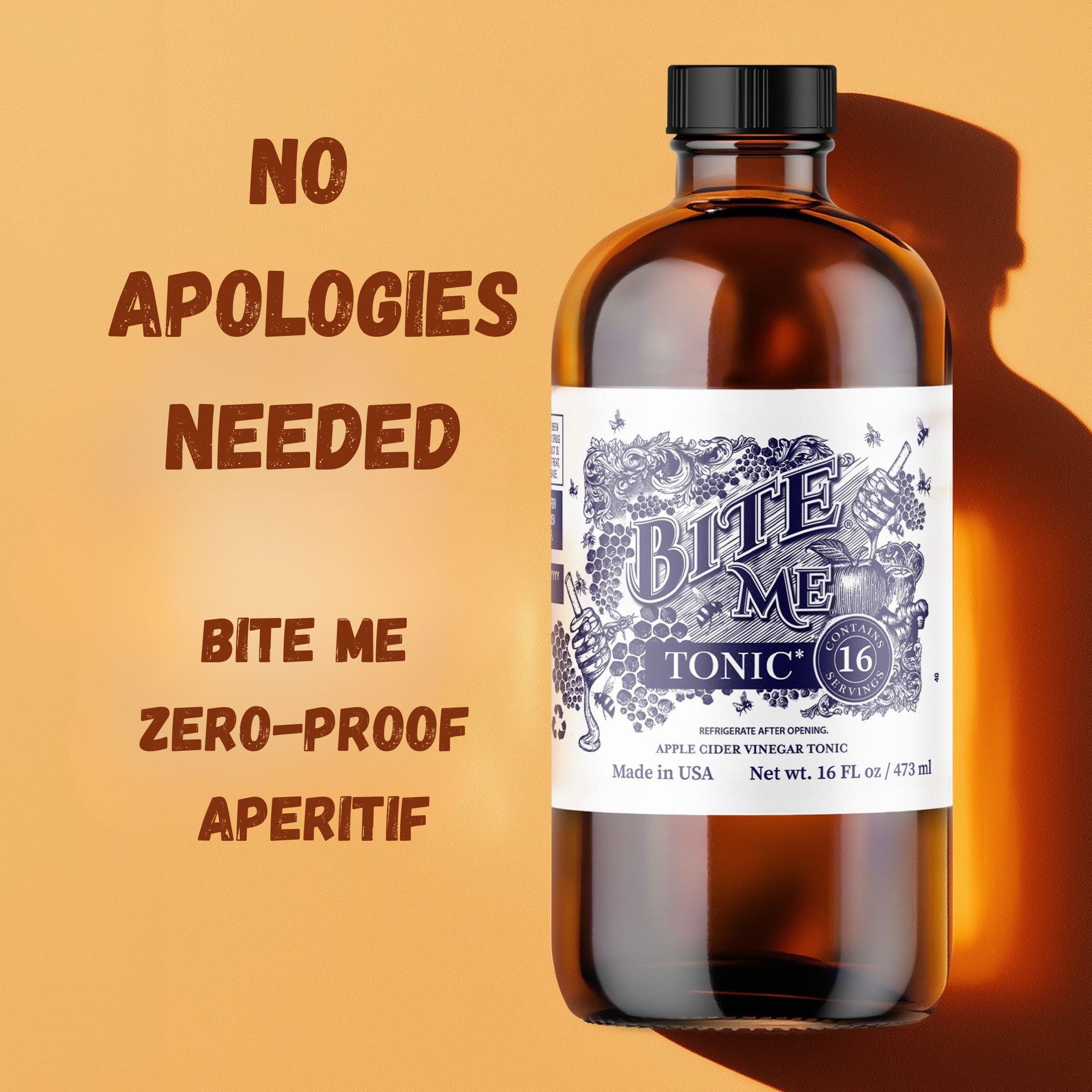
If you want to see what a well-built concentrate looks like in practice, our non-alcoholic aperitif lists every ingredient on the label, including the Manuka honey and Persian lime.
Reading the Label: Ingredient Quality and Dietary Considerations
A concentrate label is a buying decision in miniature. It tells you whether the maker built flavor from real ingredients or padded a thin base with sugar and "natural flavors." Read it in this order.
1. The ingredient list, top to bottom
Ingredients are listed by weight, so the first three or four tell you what the bottle mostly is. A well-built concentrate leads with its flavor carriers, citrus juice, vinegar, honey, ginger, not with water and syrup. Look for named ingredients over categories: "lemon juice" and "lime juice" tell you more than "natural flavors," and "ginger, turmeric, black pepper, cayenne" tells you the spice was actually built in rather than approximated.
2. Sweeteners and how they read
Honey, maple, agave, cane sugar, and fruit juice concentrate all sweeten, but they behave differently in a glass. Honey reads rounder and adds body; plain syrup reads flatter and thinner. Honey also contributes sugar, so a honey-sweetened concentrate is not a low-sugar product, check the nutrition panel rather than assuming. Watch out: a label that lists several sweeteners in different forms can stack total sugar higher than any single name suggests.
3. Acidity and acid sources
Acidity is what makes a mocktail taste like a drink instead of juice. Check whether the tang comes from real citrus juice and vinegar or from added citric acid alone. Both have a place, but real juice and vinegar bring aroma and complexity that isolated acid cannot. If you avoid vinegar, read carefully, apple cider vinegar appears under several names.
4. Additives, colors, and preservatives
Concentrates need some preservation, so don't treat every additive as a red flag. What matters is whether additives are doing flavor work or cosmetic work. Fewer, recognizable ingredients generally mean the flavor is doing the heavy lifting.
5. Allergens and dietary suitability
Scan for the allergens that matter to you: honey (not vegan), sulfites, and any tree nut or botanical extracts. Do not assume a concentrate is gluten-free, allergen-free, or sugar-free unless the label states it with verified support. If you are building strictly alcohol-free drinks, confirm that any bitters or extracts in your recipe are truly 0.0% alcohol, "non-alcoholic" does not always mean zero.
6. Serving count and pour size
The label should state servings per bottle and, ideally, the intended pour.
If you want to judge one ingredient properly, this guide to authentic Manuka honey explains what separates real Manuka from a fancy label, useful when honey is doing the sweetening.
A quick label scorecard: named ingredients in the top four, a real acid source, a sweetener you can identify, a short additive list, allergens you can see, and a stated serving count.
How to Judge Yield, Dilution Ratios and Cost Per Serving
Bottle price is the wrong number to compare. What matters is cost per finished drink, and that depends on three things: servings per bottle, the pour size that actually tastes right, and how far the concentrate stretches when diluted.
Start with servings, not ounces
A concentrate that makes sixteen full-strength drinks is a different value than one that makes eight weak ones, even at the same bottle size. Find the stated serving count and pour size first. If the label says 16 servings at one ounce, you have a clean baseline. If it hides the serving count, treat that as a warning.
Test the real pour before you trust the math
Labels describe the intended pour, but your palate decides the real one. Taste a single serving at the stated pour, then taste it diluted as you would actually drink it. If the drink only tastes like something at double the pour, your true cost per drink just doubled, and the bottle is half as economical as the label implied.
Understand dilution ratios
Dilution is the lever you control. A 1:3 ratio (one part concentrate to three parts mixer) stretches a bottle further than a 1:1 pour and usually tastes brighter, because sparkling water or soda lengthens the drink without piling on sweetness. A bold concentrate can carry a longer dilution; a mild one cannot.
Do the cost-per-drink math once
Divide the bottle price by the number of full-strength servings you actually get at your real pour. That single number lets you compare any two bottles fairly, regardless of bottle size or marketing. Then sanity-check it against how many drinks you will realistically make in a month, a bottle you finish is cheaper per drink than a bargain bottle that sits half-used in the fridge.
A comparison framework
| What to check | Weak buy | Strong buy |
|---|---|---|
| Servings per bottle | 6 to 8 | 16 or more |
| Pour that tastes right | 2 oz, still thin | 1 oz, still bold |
| Dilution it holds | 1:1, mostly water | 1:3, still layered |
| Label clarity | "Natural flavors" | Named ingredients |
| Cost per finished drink | Rises at real pour | Stable at stated pour |
Watch out: a low bottle price paired with a weak pour is the most common false economy in mocktail mixers. The cheap bottle that needs two ounces per drink often costs more per glass than the concentrated one that needs one.
Test before you buy in bulk
Before committing to a large bottle or a multi-pack, run a small tasting. Pour a measured ounce neat, note the aroma, sweetness, acidity, and finish, then build one drink at your intended ratio with a plain mixer like sparkling water. For a sense of how a well-built concentrate performs across a lineup, browse these easy apple cider vinegar mocktails.
Balancing Acidity, Sweetness and Spice in a Mocktail Concentrate
Balance is the whole game, and it starts before you add anything. A concentrate that already carries tang, sweetness, and warmth needs less from you.
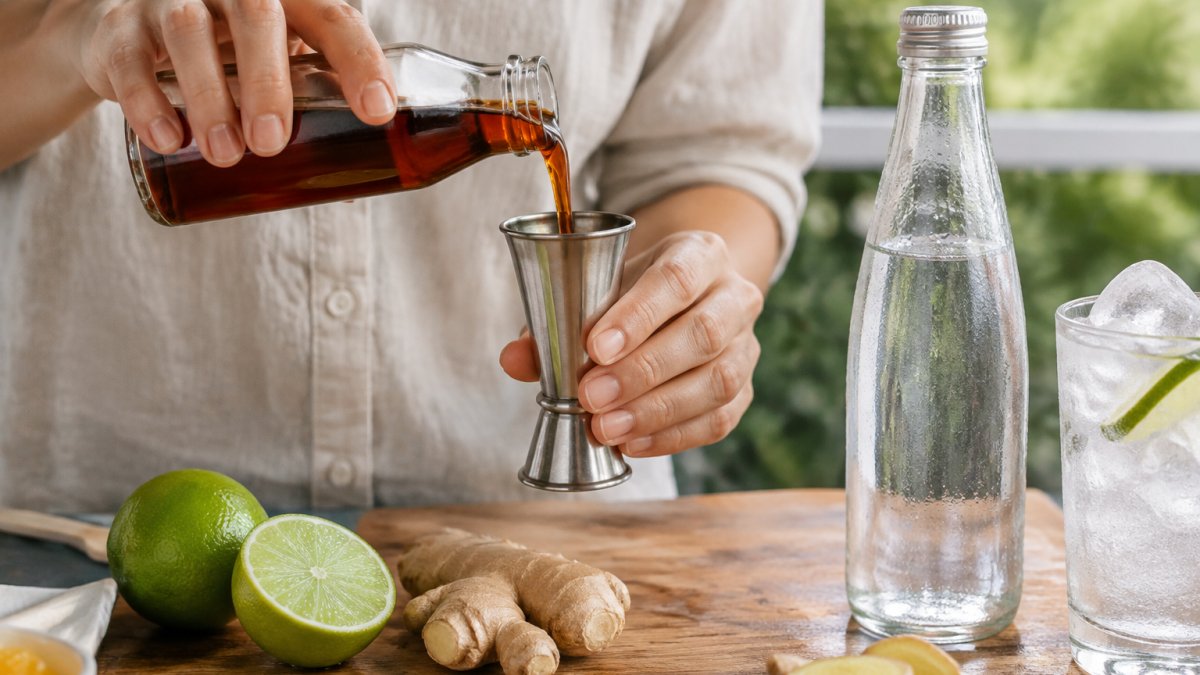
Taste the concentrate neat first, then diluted. Ask three questions:
- Is the acidity bright or harsh? Bright means it lifts the drink. Harsh means it needs dilution, not more sugar.
- Is the sweetness rounded or flat? Honey reads rounder than plain syrup.
- Does the spice linger? A warm finish is the point. A burn that blocks everything else is not.
If you're working through a bottle that runs too tangy, this piece on balancing mocktail acidity goes deeper on keeping the bite without the pucker.
Mocktail Syrup or Concentrate: Which Base Fits Your Bar Cart?
A mocktail syrup is mostly sweetener plus flavor, so it adds body but rarely adds acidity. A concentrate usually carries acid, spice, and sweetness together.
Pick a syrup when you want to sweeten a drink you're already building, like a fruit-forward spritz.
Most home bars end up with both. Start with the concentrate, since it does more work per ounce, and add a syrup later for drinks that need rounding out.
Easy Mocktail Recipes That Show Off a Good Concentrate
Easy mocktail recipes work best when the mixer does the heavy lifting. With a concentrate on hand, you're three ingredients from a drink worth repeating.
Try these:
- The 30-second spritz. 1 to 2 oz concentrate, sparkling water, citrus wheel, plenty of ice.
- Ginger highball. 1 oz concentrate, ginger ale, lemon twist.
- Whiskey-free sour. 1.5 oz concentrate, lemon juice, a little soda, shaken over ice.
Shake the bottle first, measure your pour, then taste before adding extra citrus or sweetener. The concentrate already brings honey sweetness and citrus tang, so start light.
How to Make a Mocktail With Sprite Using a Concentrate
To make a mocktail with Sprite, pour 1 ounce of concentrate over ice, top with 3 to 4 ounces of chilled Sprite, and stir once. The soda brings sweetness and bubbles; the concentrate brings acidity, ginger warmth, and depth. Taste, then adjust.
Sprite is sweet, so start with less concentrate than you think. A ratio near 1:3 keeps the drink bright instead of syrupy.
For a version with more structure, try our Bite Me Spritz and use it as your template. Same idea, better balance.
Choosing a concentrate comes down to reading the label, doing the serving math, and tasting before you commit.
Frequently Asked Questions
What should you look for in a mocktail concentrate?
Start with the ingredient list: you want real juice, spices and a sweetener you can name rather than a long list of flavorings. Check the dilution guidance so you know how many drinks a bottle yields, and taste a small pour before committing to a large bottle. A good mocktail concentrate brings acidity, sweetness and warmth in balance, so you can add a mixer and get a layered drink without extra work. Bite Me Tonic, for example, lists organic apple cider vinegar with the mother, Manuka honey, ginger, citrus, turmeric and warming spices, and each 16 fl oz bottle provides 16 servings.
What is the difference between a mocktail concentrate and a ready-to-drink mocktail?
A ready-to-drink mocktail is already diluted and carbonated, so you pour it straight from the can or bottle. A mocktail concentrate is undiluted: you measure a small pour and add sparkling water, ginger ale, Sprite or another mixer yourself. Concentrates give you control over strength, sweetness and carbonation, and they usually cost less per drink because you are not paying to ship water. They also take up less fridge space, which matters if you like variety. The trade-off is one extra step: measuring and stirring.
How do you balance sweetness and acidity in a mocktail?
Taste the concentrate on its own first, then add mixers gradually. If the drink tastes flat, a squeeze of lime or lemon brings back brightness. If it tastes sharp, a splash of honey syrup or a sweeter mixer like ginger ale rounds it out. Sparkling water lengthens a drink without adding sugar, which is useful when a concentrate already carries honey sweetness. Bite Me Tonic brings honey sweetness, citrus tang and ginger warmth in one pour, so taste before adding extra sweetener or citrus and adjust in small amounts.
How do you make a mocktail with Sprite?
Pour 1 to 2 oz of mocktail concentrate over plenty of ice in a tall glass, then top with 4 to 6 oz of chilled Sprite and stir gently. Add a lime wheel or a sprig of mint for garnish. Sprite is sweet and lemon-lime forward, so it works best with a concentrate that has real acidity and spice to cut through it. Start with 1 oz of concentrate, taste, and add more if you want a bolder drink. Serve immediately so the carbonation stays lively.
