
How to Heal Gut Lining Naturally: A Step-by-Step Guide
Table of Contents
- Understanding Intestinal Permeability and Gut Lining Damage
- Signs of Poor Gut Health You Shouldn't Ignore
- Step 1: Remove Inflammatory Foods and Identify Your Triggers
- Step 2: Add Foods That Repair Gut Lining
- Step 3: Choose the Right Supplements for Gut Lining Repair
- Step 4: Manage Stress and Sleep for Mucosal Barrier Recovery
- How Long to Heal Leaky Gut and What to Expect
- Common Mistakes to Avoid When Healing Your Gut
- Frequently Asked Questions
Last Updated: September 18, 2026
Understanding Intestinal Permeability and Gut Lining Damage
Intestinal permeability, often called leaky gut syndrome, happens when the tight junctions in your gut lining weaken. These junctions normally control what passes through your intestinal walls. When they break down, undigested food particles and bacteria can slip into your bloodstream.
Your gut lining's tight junctions act like bouncers, controlling what enters your bloodstream. When inflammation damages these connections, your gut becomes more permeable than it should be.
Bloating, brain fog, and fatigue often point to a compromised gut barrier. You can heal gut lining naturally with the right approach. The process is straightforward once you understand what your gut needs.
Signs of Poor Gut Health You Shouldn't Ignore
Your body sends clear signals when your gut lining needs help. These signs often appear together, creating a pattern you can recognize.
Common indicators include:
- Persistent bloating after meals
- Brain fog or difficulty concentrating
- Unexplained fatigue
- Skin issues like eczema or acne
- Food sensitivities that developed suddenly
- Digestive discomfort or irregular bowel movements
- Joint pain or muscle aches
- Mood swings or anxiety
Your gut produces neurotransmitters affecting mood and cognition. When your mucosal barrier is compromised, this communication breaks down. Early intervention makes healing faster and easier.
Step 1: Remove Inflammatory Foods and Identify Your Triggers
The first step to heal gut lining naturally is removing foods that irritate your intestinal walls and give your gut a chance to repair.
Common inflammatory foods include:
- Processed seed oils (vegetable, canola, soybean oil)
- Refined sugar and high-fructose corn syrup
- Alcohol and caffeine
- Gluten (for sensitive individuals)
- Conventional dairy
- Ultra-processed foods with additives
Remove suspected problem foods for 2-3 weeks, then reintroduce one at a time while tracking symptoms. Many people find onion and garlic trigger bloating; Bite Me Wellness Tonic contains neither, making it safe for sensitive systems. Keep a food journal, patterns emerge quickly.
Step 2: Add Foods That Repair Gut Lining
Add foods containing amino acids and compounds that strengthen tight junctions. Bone broth is rich in collagen and L-glutamine, which repair intestinal cells, aim for 8-12 ounces daily.
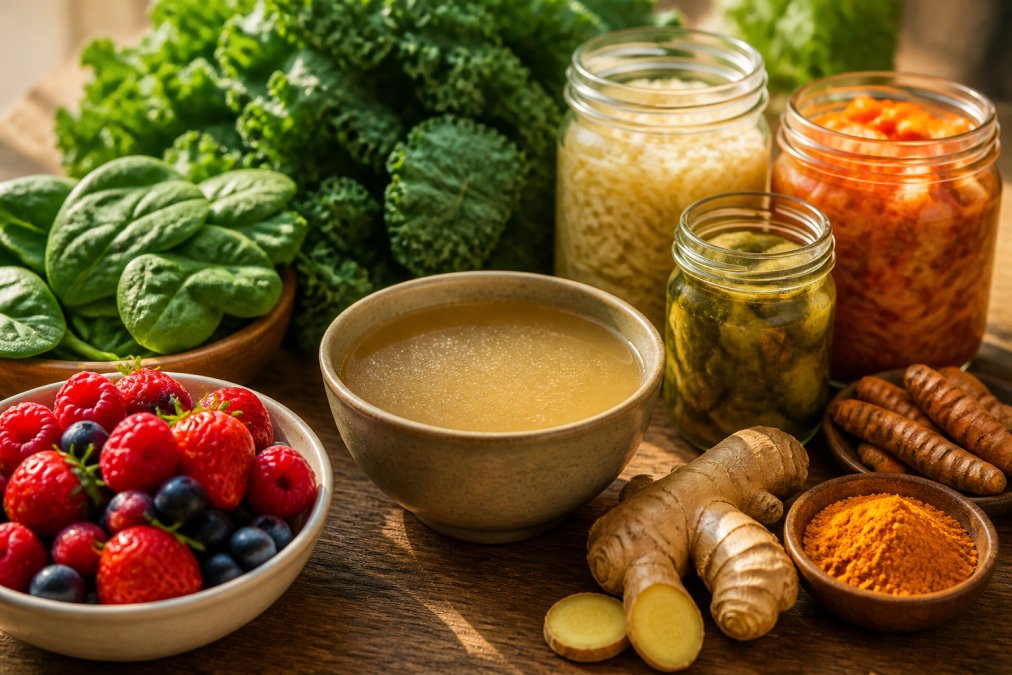
Other repair-focused foods include:
- Fermented foods (sauerkraut, kimchi, kefir)
- Leafy greens (spinach, kale, collards)
- Berries (blueberries, raspberries)
- Ginger and turmeric
- Wild-caught fatty fish
- Grass-fed beef
- Coconut oil
Fermented foods introduce probiotics that restore microbiome balance; dysbiosis perpetuates gut lining damage. Short-chain fatty acids like butyrate, produced when gut bacteria ferment fiber, strengthen the epithelial barrier, making prebiotic fiber essential.
Step 3: Choose the Right Supplements for Gut Lining Repair
Supplements accelerate healing when you've already removed triggers and added repair foods. The right ones address the root cause of intestinal permeability by supporting tight junction integrity, reducing bacterial translocation, or providing amino acids your intestinal cells need to regenerate.
L-Glutamine: The Primary Fuel for Intestinal Cells
L-glutamine is the preferred amino acid fuel for intestinal epithelial cells. When your gut is inflamed, glutamine becomes conditionally essential. A typical dose ranges from 5-15 grams daily in 2-3 divided doses with meals. Glutamine supports tight junction protein synthesis and cell division.
Zinc Carnosine: Supporting Tight Junction Proteins
Zinc carnosine is a chelated compound supporting intestinal barrier function. Zinc maintains tight junction proteins while carnosine reduces mucosal inflammation. Many with compromised barriers are zinc deficient. Typical doses are 75-150 mg daily; carnosine-bound zinc is better tolerated by sensitive systems than free zinc.
Collagen and Bone Broth Powder: Structural Support
Bone broth powder concentrates collagen and amino acids (proline, hydroxyproline) that build the extracellular matrix supporting epithelial cells. A serving contains 10-20 grams of collagen. Mix into warm water, soups, or broths. Powder offers shelf stability and convenience over liquid broth.
Probiotics: Restoring Microbial Balance
Probiotics reintroduce beneficial bacteria producing short-chain fatty acids that strengthen the epithelial barrier. Choose multi-strain formulas with at least 10 billion CFU containing Lactobacillus plantarum, Bifidobacterium longum, and Akkermansia muciniphila. Take with meals for better survival. Select brands conducting third-party testing.
Prebiotics: Feeding Your Good Bacteria
Prebiotics are non-digestible fibers feeding beneficial bacteria to produce more short-chain fatty acids. Partially hydrolyzed guar gum and inulin are well-tolerated; some may experience temporary bloating initially. Begin with 2-5 grams daily and increase gradually. Prebiotics work synergistically with probiotics.
Digestive Enzymes: Reducing Mucosal Stress
Digestive enzymes help break down food into smaller molecules before they reach your already-compromised intestinal lining. This reduces the mechanical and chemical stress on tight junctions. Look for broad-spectrum formulas containing protease, amylase, and lipase. Take enzymes with the first bite of each meal. This is particularly helpful during the early healing phase when your digestive capacity is reduced.
The 30 Day Bloat Reset Guide →
What to Avoid: Unproven or Problematic Supplements
Avoid supplements claiming to "seal" leaky gut without clear mechanisms. Be cautious with high-dose quercetin if you have histamine sensitivity. Direct-to-consumer "leaky gut tests" lack standardized validation.
Timing and Consistency Matter
Supplements work best as part of a consistent daily routine. Anchor intake to daily habits, for example, probiotic with breakfast and L-glutamine with lunch and dinner. Consistency over 8-12 weeks is necessary for meaningful barrier changes.
Step 4: Manage Stress and Sleep for Mucosal Barrier Recovery
Stress and poor sleep sabotage gut healing faster than almost any dietary factor, triggering hormonal cascades that damage tight junctions and suppress epithelial cell regeneration.
The Stress-Cortisol-Permeability Pathway
Elevated cortisol increases intestinal permeability by suppressing tight junction proteins, increasing inflammatory cytokines, and shifting microbiota toward dysbiotic species. Cortisol also diverts blood flow from your digestive tract and impairs mucus production, creating a vicious cycle where stress damages your gut and a damaged gut increases stress perception.
Sleep and Circadian Rhythm: The Repair Window
Most intestinal epithelial regeneration happens during deep sleep when your body increases growth hormone and repair compounds. Your circadian rhythm directly regulates tight junction protein expression. Inconsistent sleep or deprivation disrupts this rhythm and increases permeability. Aim for 7-9 hours nightly with consistent sleep and wake times to reinforce your circadian rhythm and maximize gut repair.
Sleep Hygiene: Creating Conditions for Deep Sleep
Sleep quality matters as much as quantity. Keep your bedroom between 60-67°F, use blackout curtains, and avoid blue light one hour before bed to trigger melatonin. Maintain consistent sleep and wake times. Avoid caffeine after 2 p.m. and alcohol, which disrupts deep sleep.
Stress Management Techniques That Work
The goal is to activate your parasympathetic nervous system (rest-and-digest mode), which lowers cortisol and allows your gut to focus on repair rather than defense.
- Meditation and breathwork: Even 10 minutes of daily meditation reduces cortisol and increases vagal tone (activation of the vagus nerve, which signals your body to relax). Box breathing, inhale for 4 counts, hold for 4, exhale for 4, hold for 4, is particularly effective for acute stress.
- Gentle movement: Yoga, tai chi, and slow walking activate parasympathetic tone without the cortisol spike that intense exercise can trigger during the healing phase. Save high-intensity workouts for after your gut has substantially recovered.
- Time in nature: Exposure to natural light, especially in the morning, resets your circadian rhythm and reduces cortisol. Aim for 15-30 minutes of outdoor time daily.
- Journaling: Writing about stress or emotions for 10-15 minutes daily reduces rumination and cortisol levels.
- Social connection: Meaningful social interaction lowers cortisol and increases oxytocin, which has protective effects on the intestinal barrier.
The Gut-Brain Axis: Bidirectional Communication
Your gut and brain communicate constantly through the vagus nerve, immune signaling, and microbial metabolites. A healthy gut microbiota produces neurotransmitters like GABA and serotonin, which calm your nervous system. Conversely, a dysbiotic (imbalanced) microbiota produces metabolites that increase anxiety and stress perception. This means that as you heal your gut lining and restore microbial balance through diet and supplements, your stress resilience naturally improves. You're not just managing stress to heal your gut; you're also healing your gut to manage stress more effectively.
Realistic Timeline for Sleep and Stress Benefits
You don't need to achieve perfect sleep and zero stress immediately. Start with one sleep hygiene change (consistent bedtime, for example) and one stress management practice (10 minutes of daily meditation). Most people notice improved digestion and reduced bloating within 2-3 weeks of better sleep alone. As sleep quality improves and stress decreases, your gut's capacity to repair accelerates significantly.
How Long to Heal Leaky Gut and What to Expect
Healing your gut lining naturally takes time. Most people see improvements in 4-8 weeks, but complete restoration takes 3-6 months.
Your timeline depends on:
- How severely damaged your gut is
- How consistently you follow the protocol
- Your stress levels and sleep quality
- Your individual healing capacity
Week 1-2: You might feel worse before better.
Common Mistakes to Avoid When Healing Your Gut
Most people sabotage their own progress by making these predictable errors.
Frequently Asked Questions
What are the signs of a damaged gut lining?
Common signs include chronic bloating, gas, digestive discomfort, food sensitivities, brain fog, fatigue, and skin issues. These symptoms suggest that tight junctions in your intestinal barrier may be compromised, allowing partially digested food and bacteria to pass through the epithelial cells. If you notice persistent digestive problems or unexplained systemic inflammation, your gut lining may need attention.
How long does it take to heal the gut lining?
Most people begin noticing improvements in 2-4 weeks with consistent dietary changes and proper supplementation, though complete healing of the mucosal barrier typically takes 3-6 months. The timeline depends on the severity of intestinal permeability, your adherence to dietary modifications, stress levels, and sleep quality. Patience is essential, healing the gut lining is a gradual process that builds on itself over time.
Can a damaged gut lining be repaired naturally?
Yes. Your intestinal lining has a natural ability to regenerate. By removing inflammatory triggers, providing amino acids like L-glutamine, consuming collagen-rich foods, and supporting your gut microbiome with probiotics and prebiotics, you create the conditions for epithelial cell repair. Stress management and adequate sleep also play crucial roles in allowing your body to focus on mucosal barrier restoration.
What foods should I avoid to help my gut lining heal?
Eliminate foods that trigger inflammation: refined sugars, seed oils, processed foods, alcohol, and excessive caffeine. If you have specific sensitivities like onion and garlic (common FODMAP triggers), avoid those too. Gluten and dairy can also increase zonulin production, which compromises tight junctions. Keep a food journal to identify your personal triggers, as individual responses vary significantly.