
Is Manuka Honey Good for Digestion? A 2026 Guide
Table of Contents
- What Is Manuka Honey and Why It Matters for Digestion
- How Manuka Honey Supports Gut Health
- Manuka Honey for Specific Digestive Issues
- How to Take Manuka Honey for Digestion
- Manuka Honey Side Effects and Safety Considerations
- Identifying Real Manuka Honey: UMF Rating and Quality Standards
- Incorporating Manuka Honey Into Your Digestive Wellness Routine
- Conclusion
Last Updated: August 26, 2026
What Is Manuka Honey and Why It Matters for Digestion
Manuka honey is a specialty honey produced by bees that pollinate the Manuka bush, native to New Zealand. Unlike regular honey, it contains unique bioactive compounds that have made it the focus of growing interest among people seeking natural digestive support. The difference comes down to specific compounds it contains, particularly methylglyoxal (MGO), which is present in far higher concentrations than in regular honey.
At Bite Me Wellness Tonic, we understand how people are turning to natural remedies to address digestive discomfort. Whether you're dealing with occasional bloating, stomach sensitivity, or more persistent discomfort, understanding what Manuka honey actually does helps you make an informed choice about whether it's right for your situation.

How Manuka Honey Supports Gut Health
The digestive support Manuka honey provides stems from its antibacterial and prebiotic properties working together. When you consume Manuka honey, you're introducing compounds that interact with your gut environment in ways standard honey cannot replicate.
Antibacterial and Anti-inflammatory Properties
Manuka honey's antibacterial strength comes primarily from its high methylglyoxal content and other bioactive compounds that target unwanted bacteria in the digestive tract. The compound works by disrupting bacterial cell function, which is why researchers have studied it for decades (peer-reviewed research). The anti-inflammatory aspect matters equally: a compromised gut lining often triggers inflammation, and Manuka honey's bioactive compounds help calm that response.
These two properties work simultaneously, you're not choosing between killing bad bacteria OR reducing inflammation. You're getting both.
Prebiotic Benefits and Microbiome Support
Beyond its antibacterial action, Manuka honey functions as a prebiotic, meaning it feeds the beneficial bacteria already living in your gut. Your microbiome thrives on specific compounds, and Manuka honey's oligosaccharides and other carbohydrates are exactly what your good bacteria need to flourish.
Antibacterial compounds kill problematic bacteria, but prebiotics selectively nourish the bacteria you want to keep and grow. This dual action is why Manuka honey is more strategic than single-mechanism approaches. A healthy gut microbiome produces short-chain fatty acids and other compounds that improve digestive function, strengthen your gut barrier, and reduce inflammation throughout your digestive tract (the NIH). When your gut flora is balanced and thriving, bloating can decrease, nutrient absorption can improve, and digestive discomfort often resolves.

Manuka Honey for Specific Digestive Issues
Understanding how Manuka honey works in theory is one thing. Seeing how it addresses specific problems you might actually be experiencing is another.
Bloating, Gas, and Digestive Discomfort
Bloating and gas typically stem from bacterial imbalance producing excessive gas or inflammation in your digestive tract causing swelling. Manuka honey addresses both mechanisms. By reducing gas-producing bacteria through its antibacterial properties, it can decrease the raw material for gas production. Simultaneously, the prebiotic compounds feed bacteria that produce less gas and more beneficial metabolites.
The anti-inflammatory aspect also matters. Even if bacterial imbalance isn't your primary issue, inflammation in your digestive tract can make you feel bloated and uncomfortable. For bloating specifically, the combination of reducing problematic bacteria while feeding beneficial ones while reducing inflammation creates a three-pronged approach that single-mechanism solutions can offer.
Stomach Ulcers and Gastritis
Stomach ulcers and gastritis involve damage to the stomach lining, often from bacteria or chronic inflammation. Manuka honey's antibacterial properties have been studied specifically for their effect on bacteria associated with ulcer formation. The anti-inflammatory compounds can help soothe the damaged lining and support its healing.
Manuka honey can create an environment where harmful bacteria cannot thrive while simultaneously reducing the inflammation that can prevent the stomach lining from healing. Consistent, daily support over weeks, not occasional use, is often needed for stomach ulcers and gastritis. Sporadic use of Manuka honey may not produce results; consistent daily consumption is what allows healing to occur.
IBS and Reflux Symptoms
Irritable Bowel Syndrome involves a combination of bacterial imbalance, inflammation, and gut sensitivity. Manuka honey addresses all three through its prebiotic effect, anti-inflammatory compounds, and antibacterial action. Reflux symptoms often worsen when digestive bacteria are imbalanced or when inflammation is present. By improving the bacterial environment and reducing inflammation, Manuka honey can help address the root cause rather than just masking symptoms.
Improvements in IBS and reflux symptoms typically take 2-4 weeks of consistent use to become noticeable.
How to Take Manuka Honey for Digestion
Knowing that Manuka honey supports digestion is useful only if you actually use it correctly. Dosage, timing, and consistency determine whether you see results.
Recommended Dosage and Timing
The effective dosage for digestive support typically falls between one teaspoon and one tablespoon daily. Starting with a teaspoon and observing how your system responds is a smart approach. Taking Manuka honey on an empty stomach, either first thing in the morning or 30 minutes before a meal, allows it to interact with your digestive system more directly. This is when its antibacterial and prebiotic effects are most pronounced.
Consistency is important. Daily use over at least 2-4 weeks is often necessary for your gut bacteria to shift and inflammation to decrease. Think of it like taking a probiotic, you wouldn't expect results from taking it once a week.
Best Practices for Daily Use
The easiest way to ensure consistency is to establish a routine. Many people take their daily Manuka honey first thing in the morning, either straight from the spoon or dissolved in warm water. Warm water is actually preferable because it helps the honey dissolve and may enhance its bioavailability.
If you find raw Manuka honey difficult to take, mixing it into warm tea (not hot, as heat can damage some bioactive compounds) works well. Some people add it to yogurt, though this reduces the empty-stomach benefit. Others use a wellness tonic that includes Manuka honey as a base ingredient, which combines the benefits of honey with complementary ingredients like ginger and turmeric.
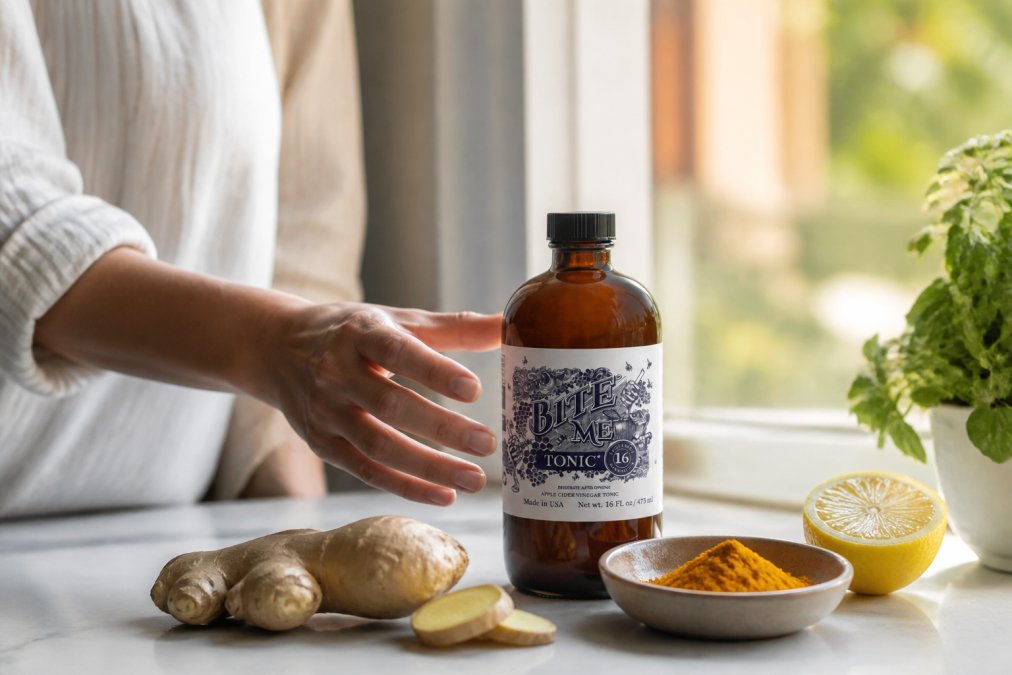
If you're looking for a convenient, ready-to-drink option that includes Manuka honey along with other digestive-supporting ingredients, Bite Me Wellness Tonic combines organic apple cider vinegar, Manuka honey, ginger, and turmeric in a smooth blend designed specifically for daily digestive support. The formula eliminates the harsh burn many people experience with raw apple cider vinegar, making it genuinely pleasant to take daily. You can explore their Bite Me Tonic 16Days bottle as a starting point.

Manuka Honey Side Effects and Safety Considerations
Manuka honey is generally well-tolerated, but understanding potential side effects and interactions ensures you use it safely.
Sugar Content and Gut Inflammation
Manuka honey is still honey and contains natural sugars that can feed certain bacteria in your gut. For most people, this isn't a problem because the prebiotic and antibacterial benefits often outweigh the sugar content. However, if you have severe dysbiosis or are in early stages of healing from significant gut damage, the sugar in Manuka honey might temporarily feed problematic bacteria before the antibacterial compounds take effect.
A teaspoon of Manuka honey contains roughly 4 grams of natural sugars (usda.gov). For most people, this is negligible and won't trigger inflammation. But if you're sensitive to sugar or have active candida overgrowth, you might want to start with a smaller amount or space out your dosing.
Interactions with Digestive Medications
If you're taking medications for digestive issues, Manuka honey is generally safe to use alongside them. However, timing matters. If you're taking antibiotics, you might want to space your Manuka honey consumption a few hours away from your medication. Consult your healthcare provider about your specific situation.
For people taking digestive enzymes or probiotics, Manuka honey actually complements these approaches. The honey's prebiotic effect helps probiotics establish themselves, and the antibacterial action creates a better environment for digestive enzymes to work. The key safety principle is transparency with your healthcare provider about adding Manuka honey to your routine.
Identifying Real Manuka Honey: UMF Rating and Quality Standards
Not all honey labeled "Manuka" is actually genuine Manuka honey. Understanding UMF ratings and quality standards protects you from paying premium prices for regular honey with a fancy label.
UMF (Unique Manuka Factor) is a rating system that measures the antibacterial potency of Manuka honey based on the concentration of methylglyoxal (MGO) and other bioactive compounds. A UMF rating of 10+ indicates some antibacterial properties. A UMF of 15+ is considered therapeutic-grade. For digestive support specifically, you want at least UMF 15. The UMF rating should be clearly displayed on the label.
Real Manuka honey comes from New Zealand and should have documentation tracing it to that origin. Many products claim Manuka benefits but source honey from other regions. If a product labeled "Manuka honey" costs the same as regular honey, it's almost certainly not genuine. Real Manuka honey with a UMF 15+ rating commands a premium for good reason, the bioactive compounds that justify that premium are what make it effective.
Incorporating Manuka Honey Into Your Digestive Wellness Routine
Making Manuka honey a sustainable part of your daily routine requires integrating it into habits you'll actually maintain.
Start by identifying the time of day when you're most likely to remember to take it. For most people, this is first thing in the morning or as part of an evening routine. If you're managing specific digestive issues, tracking your symptoms for a week before starting Manuka honey can provide a baseline. Then track for 4 weeks of consistent use to see whether it's actually helping.
Consider pairing Manuka honey with other supportive practices. Staying hydrated, eating slowly, managing stress, and getting adequate sleep all support digestive health. Manuka honey works better when your overall habits support digestion rather than working against it.
For convenience and consistency, many people find that a ready-made wellness tonic works better than managing raw honey daily. Bite Me Wellness Tonic offers a complete solution that combines Manuka honey with ginger and turmeric, three ingredients that work synergistically for digestive support. Their 2 pack Bite Me Tonic provides a month's supply, which is exactly the timeframe you need to assess whether this approach works for your digestion.
For a more structured approach to digestive reset, their 30 Day Bloat Reset Guide pairs perfectly with daily Manuka honey use, giving you meal plans and daily practices that support the digestive improvements you're seeking.

Whether Manuka honey is right for your situation depends on what's driving your digestive discomfort. If you're dealing with bacterial imbalance, inflammation, or a combination of both, Manuka honey's antibacterial, anti-inflammatory, and prebiotic properties address those factors directly. The key is choosing genuine, UMF-rated honey and using it consistently for at least 2-4 weeks before assessing results. Start with Bite Me Wellness Tonic's formulation if you want a convenient, science-informed approach that combines Manuka honey with complementary ingredients designed specifically for digestive wellness.
Frequently Asked Questions
Can manuka honey help with bloating and gas?
Manuka honey's prebiotic properties support beneficial gut bacteria, which can reduce bloating and gas over time. The oligosaccharides in manuka honey feed your microbiome, promoting better carbohydrate digestion and reducing fermentation that causes gas. Improvement can be noticed with consistent use, though results vary based on the underlying cause of bloating.
What happens if I take manuka honey every day?
Daily manuka honey consumption can strengthen your gut's bacterial balance and support digestive enzymes. However, monitor your sugar intake, as manuka honey contains natural sugars that may trigger inflammation in sensitive individuals. Starting with one teaspoon daily and observing your response helps you find the right amount for your body. If you have blood sugar concerns, consult your healthcare provider about appropriate daily amounts.
How do I know if manuka honey is real and not just regular honey with a fancy label?
Authentic manuka honey carries a UMF (Unique Manuka Factor) rating of 10 or higher, indicating its antibacterial strength. Look for products with a verified UMF number on the label and certification from organizations that test manuka honey authenticity. Genuine manuka honey is sourced from New Zealand and costs more than regular honey, if the price seems too low, it's likely not authentic. Bite Me Wellness Tonic sources its manuka honey directly from New Zealand, ensuring quality and authenticity in every bottle.
What are the main side effects of manuka honey?
Side effects are rare but may include digestive upset from the high sugar content, especially for those with sensitive guts or blood sugar concerns. Some people experience mild bloating initially as their microbiome adjusts. Allergies to bee products are possible but uncommon. If you take blood thinners or have honey allergies, consult your healthcare provider before adding manuka honey to your routine. Starting with small amounts helps your digestive system adapt.
This article was written using GrandRanker