
7 Manuka Honey Oral Health Facts Worth Knowing
Last Updated: November 3, 2026
Quick Summary
Manuka honey may have antibacterial properties against oral bacteria such as Streptococcus mutans and Porphyromonas gingivalis, but most evidence comes from laboratory studies rather than human trials. It is still sugar, so it can feed tooth decay if it coats the teeth. Use it sparingly as a food and check with your dentist before relying on it for oral care.
- Most research on manuka honey and oral bacteria comes from laboratory studies, not large human trials.
- Manuka honey is still sugar, which feeds acid-producing bacteria that contribute to tooth decay.
- Start with a half teaspoon, and use it no more than once a day.
- Never give honey to infants under 12 months old because of the risk of infant botulism.
- See a dentist if gum bleeding, swelling or tooth pain persists.
Table of Contents
- What Manuka Honey Is and How It Differs From Other Honey
- What the Research Says About Plaque, Gums and Oral Bacteria
- Sugar Content, Tooth Decay Risk and Balancing the Trade-Off
- How to Use Manuka Honey for Teeth and Gums Safely
- Manuka Honey Toothpaste and Other Oral Care Products
- Mouth Ulcers, Mouth Discomfort and When to See a Dentist
- Adding Manuka Honey to Your Daily Routine
- Frequently Asked Questions
What Manuka Honey Is and How It Differs From Other Honey
Manuka honey is a monofloral honey made from the nectar of the manuka tree, a shrub native to New Zealand and parts of Australia. Bees gather that nectar and turn it into a thick, dark honey with a distinctive earthy taste. Many people in the United States first encounter it on store shelves in small jars.
What sets manuka apart is a compound called methylglyoxal (MGO), which is present in higher levels than in most other honeys. Researchers have studied this compound for its potential antibacterial properties.
Because manuka is so distinct, its quality varies from jar to jar. Look for a rating on the label, such as a UMF (Unique Manuka Factor) or MGO number, which tells you how much of the active compound the honey contains.
At Bite Me Wellness Tonic, we include Manuka honey in our wellness tonic alongside organic apple cider vinegar, ginger and turmeric. The honey adds a naturally sweet, smooth flavor that helps the blend go down easily without a harsh burn.
What the Research Says About Plaque, Gums and Oral Bacteria
Most of what is known about manuka honey and the mouth comes from laboratory work, not from large human trials. That distinction matters, because a result in a petri dish does not automatically translate to a benefit in a living mouth.
What laboratory studies have examined. Researchers have tested manuka honey against several oral bacteria, including Streptococcus mutans, a key contributor to tooth decay, and Porphyromonas gingivalis, which is associated with gum inflammation.
What human studies have examined. Human research is much thinner. A small number of clinical studies have looked at manuka honey in the context of gum health, plaque control, or mouth discomfort, often with small participant counts and short follow-up periods. A common pattern is that results are promising but preliminary, and independent replication is limited.
What the evidence does not show. No well-controlled human trial has demonstrated that eating manuka honey prevents cavities, reverses gum disease, or treats an active infection. For background on how oral bacteria relate to gum health, the National Institute of Dental and Craniofacial Research is a reliable place to start.
Watch out: it is easy to read a headline about a lab study and assume it applies to daily eating. The gap between a laboratory finding and a clinical outcome is exactly where most overstated claims originate.
Reading UMF and MGO Ratings
If you want to understand what the research is describing, the rating on the jar matters. UMF and MGO numbers are the two most common scales. Higher numbers generally mean more of the compound that scientists study.
Labels can be confusing, and not every product is labeled accurately.
Sugar Content, Tooth Decay Risk and Balancing the Trade-Off
Manuka honey is still sugar. That is the part many enthusiastic articles skip. Sugar feeds the bacteria that produce acid and contribute to tooth decay, so any sweet food can raise cavity risk if it sits on the teeth.
Think of it as a trade-off. The honey may offer interesting properties, but frequent exposure to sugar works against healthy teeth. If you use manuka honey, keep portions small and avoid letting it coat your teeth for long periods.
Acidic products raise a related question too. Some readers worry about enamel when they add vinegar-based drinks to their routine.
How to Use Manuka Honey for Teeth and Gums Safely
Safety comes first. Use manuka honey as a food. Check with your dentist before making it part of your oral-care routine.
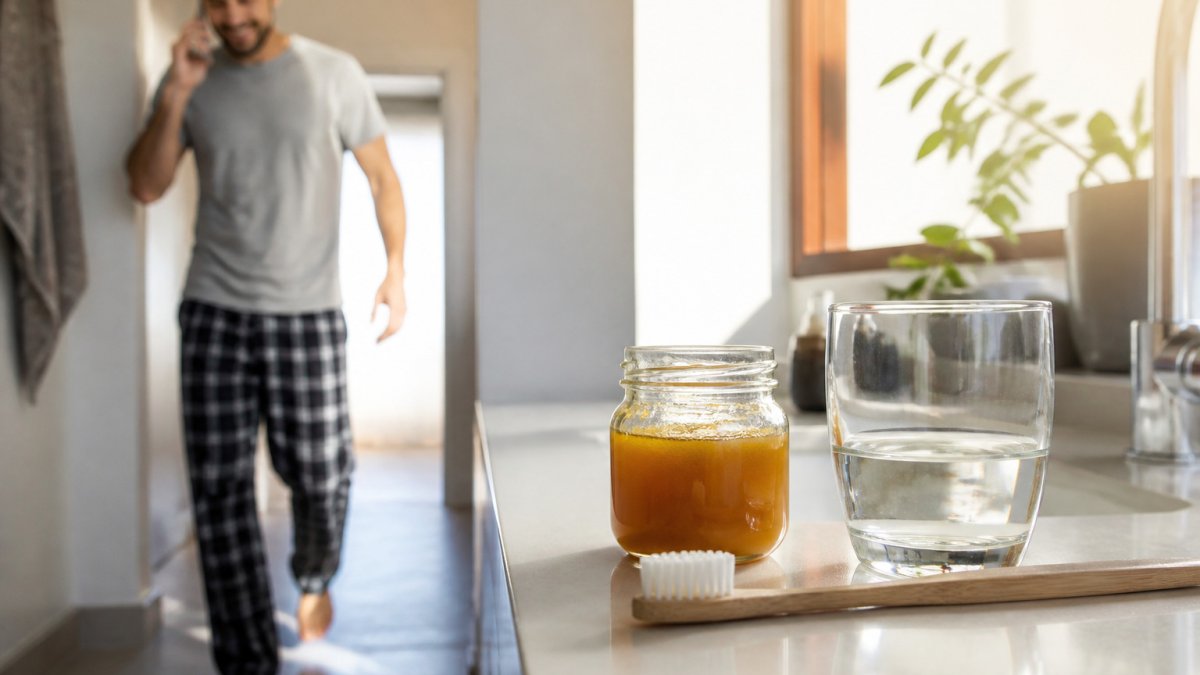
A practical, conservative approach.
-
Amount: Start with a small amount, such as a half teaspoon. There is no established oral-care dose, so smaller is the safer default.
-
Frequency: Keep it occasional rather than constant. Once a day at most is a reasonable ceiling for most people, and less is fine.
-
Infants: Never give honey, manuka or any other, to infants under 12 months old because of the risk of infant botulism.
-
Allergy: Stop using it if you notice irritation, swelling, or an allergic reaction.

A conservative approach to using manuka honey around your teeth and gums, based on the guidance in this article:
| Consideration | Guidance | Note |
|---|---|---|
| Amount | Start with a half teaspoon | No established oral-care dose exists |
| Frequency | Once a day at most | Less is fine |
| Infants | Never give honey | Risk of infant botulism under 12 months |
| Allergy | Stop if irritation or swelling occurs | Seek medical advice if reaction persists |
| Sugar exposure | Avoid letting it coat teeth for long periods | Sugar feeds acid-producing bacteria |
Manuka Honey Toothpaste and Other Oral Care Products
Compare the ingredient list before buying. A toothpaste with manuka honey may taste pleasant, but it should still clean your teeth well. If you are looking for other options, our guide to alternatives in this category walks through the differences.
Mouth Ulcers, Mouth Discomfort and When to See a Dentist
See a dentist if you have bleeding gums that do not improve, swelling that spreads, a toothache that lasts more than a few days, fever along with mouth pain, or sores that persist beyond two weeks. These signs can point to problems that need professional care, and home remedies should never delay that visit.
Adding Manuka Honey to Your Daily Routine
If you enjoy manuka honey, the simplest approach is to add a small spoonful to warm water, tea or yogurt. Pair it with your usual brushing and flossing, and keep an eye on how much sugar you eat across the day.
For a convenient option, our Bite Me Wellness Tonic blends manuka honey with organic apple cider vinegar, ginger and turmeric in a ready-to-drink shot. It is designed to support gut health and the immune system, and it offers a smooth taste without a harsh burn. Visit our website for current pricing and availability.
Last Updated: November 3, 2026
Frequently Asked Questions
Can Manuka honey regrow gums?
No food can regrow gum tissue that has receded or been lost to periodontal disease. If your gums are bleeding, swollen or pulling away from your teeth, see a dentist or periodontist.
Does Manuka honey cause tooth decay?
Manuka honey is a sugar-rich food, and sugars feed the bacteria that cause tooth decay. It is a sugar-rich food, so enjoy it in small amounts as part of a balanced diet.
Is Manuka honey toothpaste better than regular toothpaste?
Manuka honey toothpaste is not clearly better than fluoride toothpaste. Fluoride has decades of evidence behind its role in preventing cavities, while the research on Manuka honey in oral care is limited and mostly early-stage. Many people like the flavor and the natural appeal. If you use one, choose a product with fluoride and check the label for sugar content. Keep using a fluoride toothpaste as your base.
Is it good to take a spoonful of Manuka honey every day?
Eating a spoonful of Manuka honey daily is a food choice, not a treatment, and it adds sugar to your diet. If you enjoy it, a small amount as part of a balanced diet is reasonable.
