
How to Know if Manuka Honey Is Real: 7 Verification Steps
Table of Contents
- Why Authenticity Matters: The Counterfeit Problem
- Step 1: Verify Origin and Batch Traceability
- Step 2: Understand UMF vs MGO Rating Explained
- Step 3: How to Read Manuka Honey Labels for Authenticity
- Step 4: Inspect Texture, Viscosity, and Sensory Markers
- Step 5: Request and Review Independent Lab Reports
- Benefits of Manuka Honey for Wellness Routines
- Red Flags: What to Avoid When Shopping
- Frequently Asked Questions
Last Updated: August 31, 2026
How to Know if Manuka Honey Is Real: 7 Verification Steps
Counterfeit manuka honey floods the market. Real manuka honey is sourced exclusively from New Zealand, comes with specific certifications, and commands premium pricing because of its unique bioactive compounds. Yet many products claiming to be authentic manuka honey are actually regular honey with a fancy label.
At Bite Me Wellness Tonic, we understand why authenticity matters. Our wellness tonic is formulated with genuine manuka honey. If you're investing in manuka honey, whether standalone or in products that contain it, you need to know how to verify you're getting the real thing.
This guide walks you through seven concrete verification steps that go beyond simply looking for a certification logo. You'll learn what to inspect on the label, how to interpret lab reports, and what sensory markers distinguish authentic manuka honey from counterfeits.
Why Authenticity Matters: The Counterfeit Problem
The manuka honey market is flooded with fakes, ranging from regular multifloral honey relabeled as monofloral manuka to honey blended with cheaper varieties and sold at premium prices. Authentic manuka honey comes exclusively from the Leptospermum scoparium plant in a specific region of New Zealand. The limited geographic source and rigorous certification requirements create a supply bottleneck that counterfeiters exploit.
This matters because many people purchase manuka honey for specific purposes. Regular honey, while nutritious, lacks the bioactive compounds that make manuka honey distinctive. If you're buying counterfeit honey thinking you're getting a particular product, you're paying premium prices for something that won't deliver what you're seeking.
While organizations like the New Zealand Beekeeping Industry Association maintain strict export standards, enforcement relies heavily on importers and retailers to verify authenticity. Once honey reaches store shelves, the burden of verification falls on the consumer.
Step 1: Verify Origin and Batch Traceability
Authentic manuka honey is produced exclusively in New Zealand. This is not marketing language, it's a regulatory requirement enforced by the Ministry for Primary Industries New Zealand.
Start by checking the label for origin statements. Look for "Produce of New Zealand" or "Made in New Zealand" printed prominently on the packaging. If the label says "Contains manuka honey" or lists New Zealand as one of multiple countries, the product is likely a blend rather than pure manuka honey.
Next, locate the batch number. Every legitimate manuka honey producer assigns a unique batch number to each production run, enabling traceability back to the specific hive location and harvest date. If a product has no batch number, or if the seller cannot provide information about that batch, the honey's authenticity is questionable.
Check whether the producer is registered with the New Zealand Apiary Register or similar regulatory bodies. Legitimate producers maintain public registrations and can provide documentation of their registration status.
Step 2: Understand UMF vs MGO Rating Explained
Two rating systems define authentic manuka honey: UMF (Unique Manuka Factor) and MGO (Methylglyoxal). Understanding the difference between these certifications is essential for identifying real manuka honey.
UMF rating measures the antibacterial potency of manuka honey using a specific laboratory test. The scale runs from UMF 10 to UMF 20+, with higher numbers indicating stronger bioactive properties. Only honey that scores UMF 10 or higher is legally permitted to be labeled as manuka honey in New Zealand. The UMF rating is licensed through the Unique Manuka Factor Honey Association, a regulatory body that certifies producers and monitors compliance.
MGO rating measures methylglyoxal content, the specific compound present in manuka honey. MGO levels in regular honey typically range from 2-10 mg/kg, while authentic manuka honey contains at least 30 mg/kg, with premium grades reaching 300+ mg/kg.
Here's the critical distinction: UMF is the more stringent standard because it's licensed and regulated. MGO is a chemical measurement that any laboratory can perform, making it easier for counterfeiters to manipulate or misrepresent. A product with an MGO rating but no UMF certification is a red flag.
When shopping, prioritize products with visible UMF certification logos on the label. If you see only an MGO rating with no corresponding UMF rating, the honey may be authentic or it may not be, MGO alone is insufficient proof.
Step 3: How to Read Manuka Honey Labels for Authenticity
The label is your first line of defense. Authentic manuka honey labels follow a specific format that counterfeiters often get wrong.
UMF certification logo. This should be a registered trademark from the Unique Manuka Factor Honey Association. The logo typically includes the words "UMF" and a rating number (e.g., UMF 15+). If the logo looks blurry, poorly printed, or doesn't match the official design, the product is likely counterfeit.
Origin statement. "Produce of New Zealand" should appear prominently. Avoid products that say "Product of [another country]" or "Contains honey from New Zealand."
Monofloral designation. Authentic manuka honey comes from the Leptospermum scoparium plant exclusively. The label should indicate "Monofloral" or specify "Leptospermum scoparium."
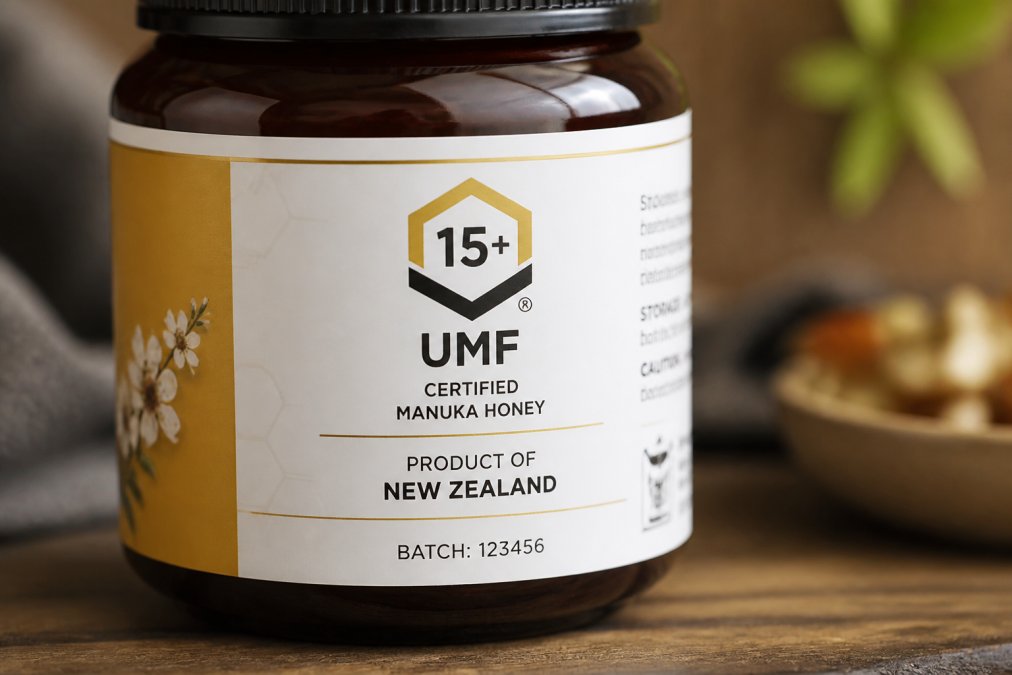
Check the back label for batch number, harvest date, nutritional information, and contact details. Counterfeiters often provide vague or incomplete contact information. Compare the label logo directly against the official Unique Manuka Factor Honey Association logo.
Step 4: Inspect Texture, Viscosity, and Sensory Markers
Authentic manuka honey has a distinctive sensory profile that counterfeiters struggle to replicate perfectly. Your senses can catch what labels sometimes miss.
Viscosity and texture. Real manuka honey is noticeably thicker than regular honey. It's slow to drip from a spoon and has a creamy, dense texture. This thickness comes from its chemical composition, manuka honey has higher levels of glucose relative to fructose, which creates a denser structure.
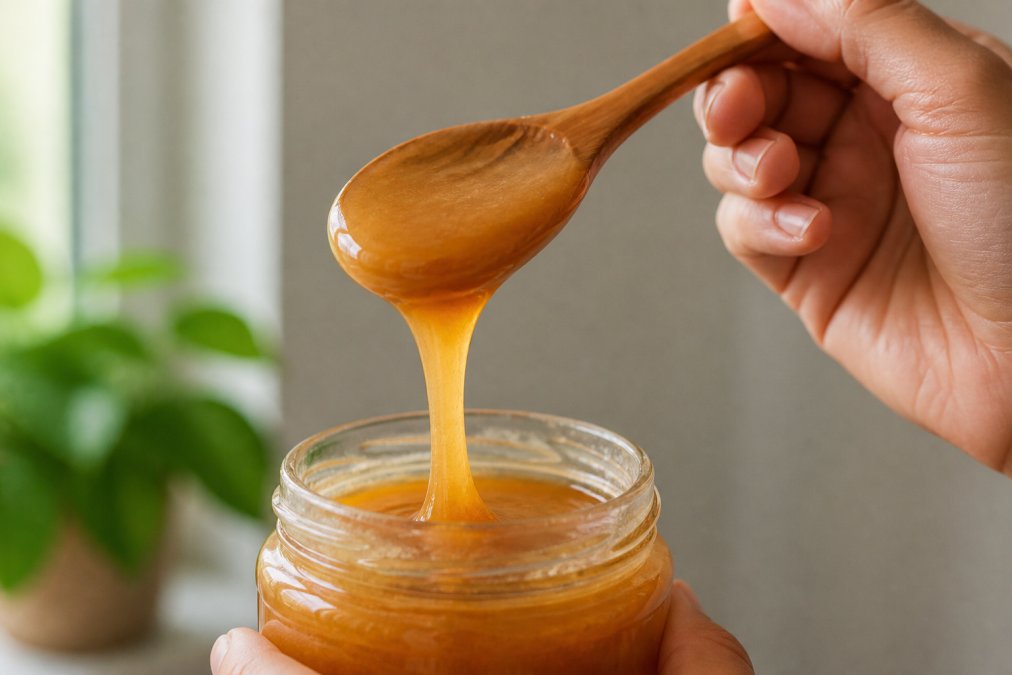
Crystallization patterns. Manuka honey crystallizes differently than regular honey. Over time, authentic manuka honey develops fine, grainy crystals throughout. Counterfeit honey often crystallizes unevenly or develops large, chunky crystals because of added ingredients.
Color and clarity. Authentic manuka honey ranges from light golden to dark amber with consistent color throughout the jar. Hold the jar up to light, authentic manuka honey is translucent or slightly opaque with a smooth appearance. Cloudiness or visible particles suggest contamination or adulteration.
Aroma. Manuka honey has a distinctive, slightly floral aroma with subtle caramel undertones. If it smells like candy or artificial sweetness, it's likely not authentic manuka honey.
Step 5: Request and Review Independent Lab Reports
The most definitive verification comes from independent laboratory testing. Legitimate producers typically have lab reports available and are willing to share them with customers.
Ask the seller or producer for a Certificate of Analysis (COA) from an independent laboratory. This document shows the honey's chemical composition, including MGO levels, pollen analysis, and any contaminants.
When you receive a lab report, look for these key elements:
MGO content measurement. The report should list methylglyoxal levels in mg/kg. Authentic manuka honey contains at least 30 mg/kg, with premium grades at 300+ mg/kg. The testing method should be specified (typically HPLC or similar analytical chemistry techniques).
Pollen analysis. A legitimate lab report includes pollen identification showing that the honey contains pollen from Leptospermum scoparium (the manuka plant). If the report shows significant pollen from other plants, the honey is multifloral, not monofloral manuka.
Moisture content. Honey should have moisture content below 20%. Higher moisture content indicates the honey was harvested too early or has been diluted.
Absence of contaminants. The report should test for common adulterants like glucose syrup and high-fructose corn syrup. Any detection of these substances disqualifies the honey as pure manuka honey.
Laboratory credentials. The lab should be accredited and recognized. Look for certifications from organizations like ISO 17025, which indicates the lab meets international standards for testing accuracy.
A red flag: sellers who cannot produce a lab report, or who claim their honey is "too pure" to need testing.
Benefits of Manuka Honey for Wellness Routines
Many people incorporate manuka honey into their daily wellness routines. Products like Bite Me Wellness Tonic combine manuka honey with other ingredients like ginger and turmeric to create a comprehensive approach to wellness. When you choose authentic manuka honey, you're ensuring you're getting the bioactive compounds you're investing in.
This is why counterfeit manuka honey is more than just a consumer fraud issue. The regulatory landscape recognizes this distinction, with the FDA's honey standards requiring that honey labeled as manuka honey meet specific quality standards.
Red Flags: What to Avoid When Shopping
Certain warning signs indicate a product is likely counterfeit or adulterated.
Suspiciously low prices. Authentic manuka honey commands premium pricing because supply is limited and production is strictly regulated. If a product labeled as manuka honey costs significantly less than competitors, it's almost certainly counterfeit or a blend.
Vague origin statements. Products that say "Contains manuka honey" or "Manuka honey blend" are not pure manuka honey. The word "blend" indicates the product combines manuka honey with other honey varieties.
Missing UMF certification. If the label lacks a UMF logo or rating, the product has not been certified as manuka honey. MGO ratings alone are insufficient.
No batch number or traceability information. Legitimate producers assign batch numbers to enable traceability. Products without batch numbers cannot be verified for origin or quality.
Sellers who cannot provide lab reports. If you ask for a Certificate of Analysis and the seller refuses or claims it's unavailable, the product's authenticity is questionable.
Inconsistent labeling across retailers. If the same product's label looks different depending on where you buy it, counterfeiters may be involved.
Unnatural aroma or taste. If the honey smells artificial, overly sweet, or chemically processed, trust your senses.
Verifying authentic manuka honey requires attention to detail, but the process becomes straightforward once you know what to look for. Start with the label, check for UMF certification and batch traceability, inspect the product's sensory characteristics, and request lab reports when possible. These seven steps eliminate the vast majority of counterfeits and ensure you're investing in genuine manuka honey.
At Bite Me Wellness Tonic, we've made this verification process part of our product development. Our wellness tonic uses authentic manuka honey sourced from certified New Zealand producers, combined with organic apple cider vinegar, ginger, and turmeric. When you choose products that prioritize ingredient authenticity, you're choosing to prioritize your wellness. SHOP Bite Me Wellness Tonic and experience the difference real manuka honey makes.
Frequently Asked Questions
What do UMF and MGO ratings mean on manuka honey labels?
UMF (Unique Manuka Factor) and MGO (Methylglyoxal) are two grading systems that measure the honey's antibacterial strength. UMF ratings range from 5+ to 20+, while MGO ratings start at 30+ and go much higher. Both indicate purity and potency, higher numbers mean stronger bioactive compounds. Look for UMF 10+ or MGO 250+ minimum for authentic manuka honey. These ratings are reliable indicators of quality you'll find on a label.
How can I verify the authenticity of my manuka honey?
Check three things immediately: the batch number on the label (all real manuka honey has one for traceability), UMF or MGO certification from an independent lab, and the origin statement confirming Leptospermum scoparium sourcing. Then request a lab report from the seller showing relevant chemical markers. Real manuka honey will have documentation available. If a seller can't provide a batch number or lab report, the product is likely counterfeit.
What certifications should I look for on manuka honey?
Look for the UMF certification logo from the Unique Manuka Factor Honey Association or MGO certification from independent testing labs. These are two credible certifications for authentic manuka honey. The label should clearly state either 'UMF 10+' or higher, or 'MGO 250+' or higher. Be wary of products with vague claims like 'premium' or 'pure' without specific numerical ratings, these lack third-party verification and suggest the product may not be genuine.
Does real manuka honey have a distinct taste or texture?
Authentic manuka honey is noticeably thicker and creamier than regular honey, with a smooth, dense texture that coats your mouth. The taste is richer and more complex, slightly floral with subtle earthy notes, rather than the simple sweetness of clover honey. It crystallizes more slowly than regular honey due to its composition. If the honey you're considering tastes thin, overly sweet, or identical to standard honey, it's likely not authentic manuka honey.
This article was written using GrandRanker