
Capilano Honey vs Organic Manuka Honey: 2026 Guide
Table of Contents
- Capilano Honey vs Organic Manuka Honey: Quick Comparison
- What Makes Capilano Honey Different from Organic Manuka Honey?
- MGO vs UMF Honey Ratings: What the Numbers Actually Mean
- Benefits of Manuka Honey for Digestion
- How to Identify Authentic Manuka Honey
- Which Honey Should You Choose?
- Frequently Asked Questions
Last Updated: September 10, 2026
Capilano Honey vs Organic Manuka Honey: Quick Comparison
If you've stood in a grocery aisle squinting at two jars of honey wondering whether the price gap is real or marketing, you're not alone. This comparison of capilano honey vs organic manuka honey comes down to one question: what are you actually buying the honey for? At Bite Me Wellness Tonic, we use Manuka honey in our daily wellness shots, so we've spent real time reading labels and separating genuine bioactive honey from pretty packaging.
Here's the short version before we get into the details:
| Feature | Capilano Honey | Organic Manuka Honey |
|---|---|---|
| Floral source | Blended eucalyptus and wildflower | Leptospermum scoparium |
| Rating system | None | MGO or UMF rating |
| Processing | Typically pasteurized | Often raw or unpasteurized |
| Flavor profile | Mild, familiar sweetness | Earthy, sometimes bitter |
| Typical use | Everyday sweetener | Targeted wellness support |
| Price tier | Everyday | Higher |
The two jars are not competing for the same job. One is a table honey. The other is a functional ingredient.
What Makes Capilano Honey Different from Organic Manuka Honey?
Capilano honey is a blended Australian table honey, while organic Manuka honey comes from a single floral source and carries a measurable activity rating. That distinction drives everything else: taste, texture, price, and how you'd use each one.
Floral Source and Bee Species
Capilano-style honey blends nectar from eucalyptus, clover, and other wildflowers across multiple regions. The bees are ordinary honeybees, and the resulting honey varies batch to batch depending on what's blooming.
Manuka honey comes from bees foraging on leptospermum scoparium, a shrub native to New Zealand and parts of Australia. The floral source is narrow, and that narrowness is the point. The plant produces compounds that give the honey its antibacterial properties, which is why single-source Manuka commands a premium.
Processing Methods: Raw vs. Pasteurized
Most table honey is pasteurized or finely filtered to keep it smooth and shelf-stable. Heat treatment slows crystallization and produces the clear, pourable texture shoppers expect.
Raw honey skips that heat step. It may crystallize faster and look cloudier, but it retains more of its natural enzymatic activity and pollen count. For everyday sweetening, pasteurized is fine. For wellness use, many buyers specifically look for unpasteurized.
MGO vs UMF Honey Ratings: What the Numbers Actually Mean
MGO and UMF measure the same underlying compound, methylglyoxal, but they are not interchangeable labels. Understanding why two systems exist, and what each one actually certifies, is the difference between buying verified activity and buying a number printed on a pretty jar.
The Chemistry Behind the Number
Methylglyoxal (MGO) is the naturally occurring compound responsible for much of Manuka honey's distinctive activity. It forms in the honey through a conversion process: a compound called dihydroxyacetone (DHA), present in the nectar of the leptospermum scoparium flower, gradually converts to MGO as the honey matures. This is why Manuka honey is typically tested after a stabilization period rather than immediately after harvest, the MGO level climbs over time before plateauing.
MGO is reported as a direct concentration: milligrams of methylglyoxal per kilogram of honey (mg/kg). If a jar says "MGO 250," it contains approximately 250 mg/kg of methylglyoxal. That is a raw measurement, not a grade.
UMF, by contrast, is a trademarked grading system administered by the Unique Manuka Factor Honey Association. It is not a different compound or a different test, it is a licensed label that maps a tested MGO range to a branded number. A producer must be a licensed UMF licensee and submit to independent laboratory testing to print UMF on a jar. That licensing layer is why UMF jars often carry a higher price: you are paying for third-party verification, not just honey.
How the Two Scales Line Up
| Rating Label | Approximate MGO Level | What It Typically Signals |
|---|---|---|
| UMF 5+ | Around 83 mg/kg | Entry-level; everyday table use |
| UMF 10+ | Around 263 mg/kg | Mid-range; general daily serving |
| UMF 15+ | Around 514 mg/kg | Higher-activity; targeted use |
| UMF 20+ | Around 829 mg/kg | Top-tier; premium pricing |
| UMF 25+ | Around 1,200+ mg/kg | Rare; specialty and limited harvests |
A jar labeled "MGO 100" and a jar labeled "UMF 6+" may contain honey from the same hive, the difference is which certification path the producer chose. Neither number tells you the honey tastes better. Higher MGO correlates with a more intense, sometimes bitter flavor, which is why very high-rated jars are often used in small measured servings rather than spread on toast.
Why the Distinction Matters When You Buy
A direct MGO number on a label tells you a concentration was measured. A UMF label tells you the concentration was measured and the producer is part of a licensed verification program with periodic audit requirements. Both are legitimate; they simply offer different levels of assurance.
What neither system does is guarantee the honey is monofloral. A jar can carry an MGO number and still be a blend. That is why the rating number and the words "monofloral" or "single source" should appear together on any jar you are paying a premium for.
Reading a Manuka Label Without Getting Fooled
Look for three things: a specific rating number, the words "monofloral" or "single source," and a producer name you can trace. Vague phrases like "Manuka blend" or "Manuka-style" mean the jar contains some Manuka mixed with other honey, which dilutes the activity you are paying for. If there is no number on the front, flip the jar and check the back before you buy.
One more habit worth building: check whether the rating is printed on the label itself or only on the outer packaging. A number that appears only on a cardboard sleeve, and not on the jar, is harder to verify once the packaging is gone.
Benefits of Manuka Honey for Digestion
Manuka honey is often used as a gentle digestive support, partly because of its antibacterial properties and partly because it's a natural sweetener that's easier on the stomach than refined sugar for some people. It won't fix a chronic gut issue on its own, but it fits comfortably into a broader gut-health routine.
The practical angle: many people find that a small daily serving of bioactive honey sits well alongside fermented foods, fiber, and hydration. If you dislike the harsh burn of straight apple cider vinegar, combining the two in a balanced tonic is a common workaround. That's the approach we take at Bite Me Wellness Tonic, pairing organic apple cider vinegar with Manuka honey, ginger, and turmeric so the vinegar goes down smoothly instead of fighting you.
How to Identify Authentic Manuka Honey
Authentic Manuka honey carries a verifiable rating number and a traceable producer, and it usually costs noticeably more than blended table honey. If a jar claims Manuka but shows no number and sits at a bargain price, treat that as a red flag.
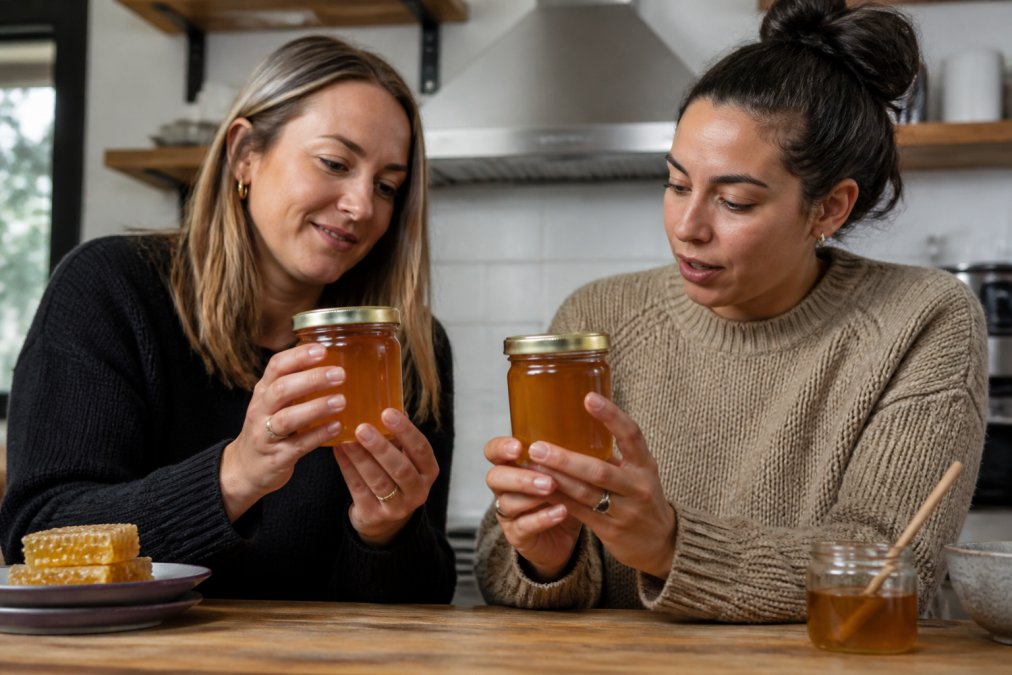
The FDA guidance on honey labeling and adulteration is a useful starting point for understanding what producers are and aren't required to disclose. Beyond that, a few habits will protect you.
Why Adulteration Happens
Honey is one of the most frequently adulterated food products in the world, and Manuka is among the most counterfeited because of its price premium. The economics are simple: if a jar can be stretched with cheaper syrup or blended with lower-activity honey and still sold at a Manuka price, the margin is enormous. That incentive is why the testing and certification systems described above exist in the first place.
Adulteration takes a few common forms:
- Syrup extension, adding high-fructose corn syrup, rice syrup, or beet syrup to increase volume
- Blending, mixing a small amount of genuine Manuka with cheaper honey and labeling it "Manuka blend"
- Misrepresentation, selling ordinary honey under a Manuka name with no rating at all
- Origin mislabeling, claiming a region or country of origin that does not match the actual harvest
Common Adulteration Signs
- No rating number anywhere on the jar, front or back
- "Manuka blend" or "Manuka-style" language instead of a specific grade
- A price far below every other Manuka on the shelf
- Thin, watery viscosity when real Manuka tends to be thick
- No producer name, region, or harvest information
- A label that leans entirely on imagery instead of data
At-Home Checks That Actually Tell You Something
No kitchen test can confirm MGO concentration, that requires laboratory analysis. But a few simple observations can flag a jar that is likely diluted or misrepresented:
The water test. Drop a spoonful of honey into a glass of room-temperature water. Genuine honey tends to sink and settle as a lump rather than dissolving quickly. Honey that disperses almost immediately is a sign of added syrup. This test is not definitive, but it is a useful first filter.
The thumb test. Place a drop on your thumb. Real honey holds its shape and does not run. Diluted honey spreads or absorbs.
The crystallization pattern. Raw, unprocessed honey crystallizes over time, that is normal and expected. Honey that stays perfectly clear and pourable for years on a shelf, with no crystallization at all, has often been heavily filtered or heat-treated, which can strip the pollen and enzymes that signal a less-processed product.
The label audit. This is the most reliable at-home check. A genuine jar will name the producer, state the region of harvest, and print a specific rating number. If any of those three are missing, the jar is asking you to take its word for it.
If you want to go deeper on purity standards, New Zealand's Ministry for Primary Industries Manuka honey science definition explains the testing criteria used to certify genuine product. That definition is the benchmark regulators and laboratories use, and it is the standard a legitimate producer should be able to point to.
Which Honey Should You Choose?
Capilano honey is the better pick for everyday sweetening: tea, toast, baking, and anything where you want a mild, familiar flavor at a reasonable price. Organic Manuka honey is the better pick when you're buying for a specific purpose, like digestive support or immune-season wellness, and you're willing to pay for verified activity.
The deciding factor is intent, not brand loyalty. If you're spooning honey into oatmeal, buy the table honey and save your money. If you're taking a daily serving for gut health, buy the jar with a real number on it.
For anyone who wants the benefits without the harsh taste of straight vinegar or the hassle of mixing their own tonic, Bite Me Wellness Tonic combines organic apple cider vinegar, Manuka honey, ginger, and turmeric in a ready-to-drink shot. It's free of onion and garlic, so it won't aggravate the sensitivities that trip up a lot of wellness products, and it's formulated to taste good enough that you'll actually finish the bottle.
Sorting through honey labels is genuinely harder than it should be, and the gap between a table honey and a rated Manuka jar is wider than most shoppers realize. If your goal is daily gut support without the burn of raw vinegar or the guesswork of DIY tonics, Bite Me Wellness Tonic is built for exactly that: organic apple cider vinegar, Manuka honey, ginger, and turmeric in one smooth shot. Get started with Bite Me Wellness Tonic and make your daily wellness routine something you look forward to.
Frequently Asked Questions
Is Capilano Manuka honey any good?
Capilano produces a range of honey products, including some labeled as Manuka. Quality depends on the specific product's MGO rating and whether it carries a certified UMF grade. For specific applications, look for a clearly stated MGO level of 100+ or a UMF 5+ or higher. Without that rating, you cannot confirm the honey contains meaningful methylglyoxal.
What does the MGO rating on honey labels mean?
MGO stands for methylglyoxal, the naturally occurring compound found in Manuka honey. The number on the label indicates milligrams of methylglyoxal per kilogram of honey. A rating of MGO 100 means 100 mg/kg. Higher numbers mean greater concentration. MGO 100+ indicates a certain level, while MGO 400+ and above are used for specific purposes.
How do I verify the authenticity of Manuka honey?
Check for a UMF rating on the label, which verifies the honey meets standards set by the Unique Manuka Factor Honey Association. Look for the MGO number alongside it. Scan the QR code or batch number on the jar to trace it back to the producer. Authentic Manuka also has a distinctive earthy, slightly bitter taste and a thick, viscous texture. If the label only says 'Manuka blend' without a rating, it likely contains very little genuine Manuka.
Is organic honey always better than conventional honey?
Organic certification confirms the honey was produced without synthetic pesticides and that hives meet specific USDA organic standards. However, organic does not guarantee a high MGO rating. A conventional Manuka honey with a verified MGO 400+ rating may offer different characteristics than an organic honey with no rating. For specific wellness goals, prioritize the MGO or UMF rating first, then consider organic certification as a secondary factor.