
How Should You Store Manuka Honey to Keep It Fresh?
Last Updated: October 24, 2026
Quick Summary
Store manuka honey in a cool, dry place like a pantry or cupboard at room temperature between 50-70°F, keeping it in its original glass jar with a tightly sealed lid. Protect it from direct sunlight, heat sources, and moisture by using a clean, dry spoon every time you scoop.
- Keep manuka honey away from ovens, dishwashers, and heat vents to prevent crystallization and quality degradation
- Use a clean, dry spoon each time to prevent moisture and contaminants from shortening shelf life
- Do not refrigerate manuka honey, as cold temperatures speed up crystallization unnecessarily
- Opened jars maintain peak quality for 1-2 years with proper storage in cool, dark conditions
- Crystallization is natural and reversible with gentle warming in a bowl of warm water for 15-30 minutes
Table of Contents
- The Basics of Storing Manuka Honey
- Does Manuka Honey Need to Be Refrigerated?
- Manuka Honey Shelf Life and Expiration
- Storing Manuka Honey in Hot Weather
- Understanding Manuka Honey Crystallization
- Storage After Opening vs. Unopened Jars
- Protecting Your Manuka Honey Investment
- Frequently Asked Questions
The Basics of Storing Manuka Honey
Proper storage keeps your manuka honey fresh and flavorful for years.
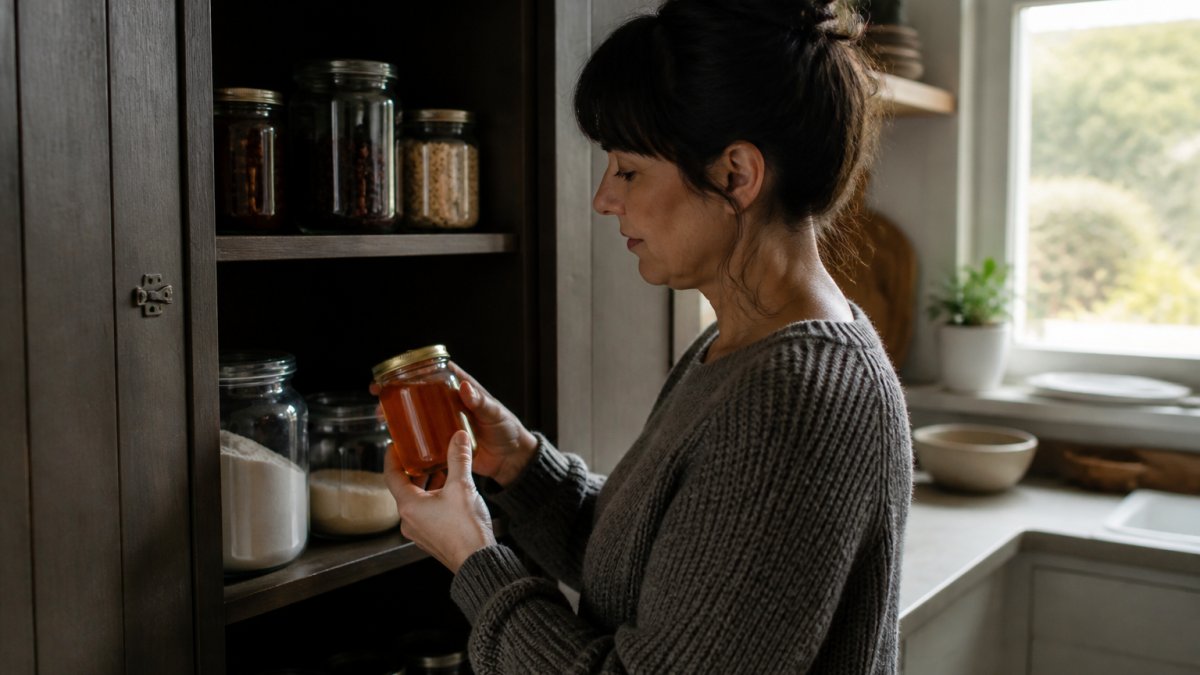
Manuka honey thrives in a cool, dry place.
The container matters too.
At Bite Me Wellness Tonic, we emphasize that understanding your honey's storage needs starts with knowing what you're protecting. Learn about the benefits of manuka honey to understand why proper storage preserves those qualities.
One common mistake is storing honey near appliances or in warm kitchen cabinets.
Another tip: use a clean, dry spoon every time you scoop honey.
Follow these core storage principles to keep your manuka honey fresh and flavorful.
| Storage Factor | Best Practice | Why It Matters |
|---|---|---|
| Temperature | Room temperature, 50-70°F | Heat accelerates crystallization and damages delicate compounds |
| Location | Cool, dry pantry or cupboard | Protects from direct sunlight and heat sources like stoves |
| Container | Original glass jar, tightly sealed | Loose caps invite moisture, air, and contamination |
| Spoon | Clean and dry every time | Wet spoons introduce contaminants that shorten shelf life |
| Avoid | Near ovens, dishwashers, heat vents | These appliances accelerate quality degradation |
| Refrigeration | Not recommended | Cold temperatures speed up crystallization unnecessarily |
Does Manuka Honey Need to Be Refrigerated?
No, refrigeration is not necessary for manuka honey and often does more harm than good.
Room temperature storage is the better choice. Refrigeration changes texture without extending life.
The only exception: in a very hot climate or during extended heat waves, a cool pantry becomes even more critical.
Manuka honey's natural properties mean it doesn't need cold to stay safe.
Manuka Honey Shelf Life and Expiration
Manuka honey is remarkably shelf-stable, but 'shelf-stable' is not the same as 'unchanged forever.' Understanding what the date on the jar means, and what it doesn't, helps you store your honey with realistic expectations.
What the best-before date actually tells you
A best-before date on manuka honey is a quality indicator, not a safety cutoff. Manufacturers set it to reflect how long the honey retains its flavor, aroma, color, and texture under recommended storage. Properly stored honey past that date is generally still safe to eat, though it may have darkened, lost aromatic intensity, or crystallized more firmly.
How storage conditions change quality over time
Quality degradation is driven mainly by heat, moisture, and time. Heat accelerates the Maillard reaction, darkening honey and muting floral notes. Moisture from a loose lid or wet spoon dilutes honey's low-water-activity environment, letting fermentation yeasts activate.
A jar kept in a cool, dark cupboard with a tight seal holds peak quality far longer than one stored above a stove or near a dishwasher. The difference is quality, not safety.
Normal changes versus signs of spoilage
Not every change in stored manuka honey means something is wrong. These shifts are normal and expected:
- Crystallization: grainy, opaque texture as glucose solidifies. This is natural and reversible with gentle warming.
- Darkening: gradual color shift from amber toward darker brown, especially over years or after heat exposure.
- Aroma mellowing: loss of some bright floral top notes while the deeper honey character remains.
- Thickening: increased viscosity as moisture content slowly equilibrates or as crystallization begins.
These changes, by contrast, suggest a storage problem and warrant caution:
- Active bubbling or fizzing after the jar has been opened and left at room temperature.
- An alcoholic, yeasty, or sour smell rather than the expected honey aroma.
- Visible mold on the surface or under the lid, rare in honey but possible when moisture has been introduced.
- A thin, watery layer separating from the bulk of the honey, which can indicate moisture uptake.
If you see any of the second group, the jar was likely compromised by a loose lid, a wet spoon, or storage in a humid spot. Discard it rather than trying to salvage it.
A practical timeline for opened and unopened jars
Unopened jars stored under recommended conditions maintain peak quality through their best-before date and often well beyond. Opened jars stay stable for a year or more, but each opening lets in air and moisture. The fewer times you open the jar and the cleaner your scoop, the longer the honey stays close to its original quality.
Why this matters for what you bought
Manuka honey commands a premium partly because of the compounds that give it its distinctive character, and those compounds degrade faster under heat and moisture. Storing with the date and quality changes in mind helps you get the most from your purchase. If you are unsure whether your jar is authentic, check whether your manuka honey is real before investing effort in long-term storage.
Storing Manuka Honey in Hot Weather
Most storage advice assumes a mild indoor climate. Homes in hot, humid, or sharply seasonal regions present different challenges, and the right storage spot changes with the season.
Why heat is the primary quality risk
Honey's low moisture and natural acidity make it inhospitable to most spoilage organisms, but heat still affects quality. Elevated temperatures accelerate the changes that darken honey, mute aroma, and speed crystallization. The effect is cumulative: a jar near a warm appliance for weeks may show noticeable quality loss even without extreme heat. The goal in hot weather is minimizing cumulative heat exposure.
Finding the coolest spot in a hot home
In homes without central air conditioning, indoor temperatures can climb well above the outdoor average, especially in upper floors and rooms with west- or south-facing windows. A few practical rules:
- Lower floors and interior rooms generally stay cooler than upper floors and perimeter rooms.
- Basements and cellars are often the coolest spaces, provided they are dry. Moisture is a bigger threat than cool air.
- Interior closets and cupboards away from exterior walls buffer against outdoor temperature swings better than kitchen cabinets near the stove or refrigerator exhaust.
- Avoid the garage, shed, attic, and car entirely during warm months. These spaces can reach temperatures that accelerate quality loss quickly.
If your home has no consistently cool spot, a small insulated storage box in the darkest corner of the lowest floor can reduce temperature swings. Do not add ice packs directly against the jar, condensation introduces moisture.
Seasonal adjustments
Storage is not static across the year. In summer, minimize peak heat exposure and check seals more often, since heat can soften lids and increase evaporation.
A simple seasonal habit: at the start of each major season, check your honey's location. Is it still in the coolest available spot? Has anything changed, a new appliance, a moved shelf, a sunnier window, that affects the jar?
Travel, shipping, and temporary heat exposure
Manuka honey often travels, as a gift, in a suitcase, or shipped from a producer. Short-term heat exposure during transport is usually manageable if you plan ahead:
- Use an insulated bag for car trips and air travel. A small cooler bag without ice packs is sufficient for most journeys.
- Avoid checked luggage in summer if you can. Cargo holds and tarmac delays can expose jars to high heat for extended periods.
- Ship during cooler months when possible, and choose expedited shipping so the jar spends less time in transit.
- Do not pack honey with ice or frozen gel packs unless the packs are sealed and separated. Condensation from melting ice can introduce moisture.
If a jar has been exposed to significant heat, left in a hot car for hours, say, let it cool gradually at room temperature and inspect it. Crystallization may accelerate and the honey may darken, but it is generally still usable if the seal held and no moisture entered. If the lid was loose or the honey shows signs of fermentation, discard it.
A note on refrigeration as a last resort
Refrigeration is not recommended for routine storage because cold accelerates crystallization. However, in a genuinely hot climate with no cool indoor spot, a refrigerator beats a consistently warm cupboard. If you do refrigerate, keep the jar tightly sealed to prevent moisture uptake and accept faster crystallization. Gentle warming restores pourability when you are ready to use it.
Understanding Manuka Honey Crystallization
Crystallization is natural and doesn't mean your honey is spoiled.
Crystallized honey becomes grainy and thick because honey naturally contains glucose, which separates and solidifies over time.
To restore crystallized honey to its liquid state, warm the jar gently.
Some people prefer crystallized honey for spreading or mixing into foods.
Prevention is possible but not always practical. Keeping honey at a consistent cool temperature slows crystallization.
Storage After Opening vs. Unopened Jars
Unopened jars of manuka honey stay fresh longer than opened ones. An intact seal protects the honey from air, moisture, and contaminants.
Once you open a jar, the clock starts ticking.
After opening, store the jar the same way as an unopened one: cool, dry, dark. The difference is frequency of exposure.
An opened jar typically maintains peak quality for 1-2 years with proper storage. After that, it's still safe but may have lost some flavor or developed a darker color. Most people finish a jar long before quality noticeably declines.
If you buy large quantities, consider transferring unopened jars to storage and opening one at a time.
Protecting Your Manuka Honey Investment
Manuka honey is premium and worth protecting. Proper storage ensures you get the full value of your purchase.
Start by verifying what you're buying. Authentic manuka honey brands matter because fake or low-quality honey doesn't deserve careful storage.
Manuka honey differs from regular honey in ways that affect how it should be kept, so its unique properties deserve proper handling.
Storage mistakes cost money.
Label your jars with the purchase date. This helps you track age and use older stock first.
Keep manuka honey in a cool, dark place in its original sealed jar.
At Bite Me Wellness Tonic, we believe that quality ingredients deserve quality care. Our wellness tonic combines manuka honey with organic apple cider vinegar, ginger, and turmeric, ingredients that work best when sourced and stored with intention. Shop our tonic to experience how real, properly preserved ingredients make a difference in how you feel.
Frequently Asked Questions
Does Manuka honey need to be refrigerated after opening?
No, refrigeration is not necessary for opened Manuka honey. Room temperature storage in a cool, dry cupboard works best. Refrigeration can accelerate crystallization, making the honey harder to use. Keep the lid tightly sealed to prevent moisture absorption, and store away from direct sunlight and heat sources. The natural properties of Manuka honey protect it from spoilage at room temperature.
How long does Manuka honey last once opened?
Manuka honey maintains its quality for years when stored properly, even after opening. Check the best-before date on your jar for guidance on peak quality. Proper storage in a cool, dry place with a sealed lid extends shelf life significantly. Many unopened jars remain usable well beyond their printed dates if kept away from heat and moisture. Once opened, use a clean, dry spoon each time to prevent contamination.
Can Manuka honey be stored in a hot kitchen?
Hot kitchens present challenges for storing Manuka honey. Prolonged exposure to warm temperatures can degrade quality and trigger crystallization. If your kitchen runs warm, consider storing your jar in a cool cupboard away from the stove and oven. During summer months or in hot climates, a pantry or interior closet away from heat sources provides better conditions. Keep the container sealed tightly to minimize exposure to temperature fluctuations.
Why has my Manuka honey crystallized?
Manuka honey crystallization is a natural process, not a sign of spoilage. It occurs when glucose in the honey forms crystals over time, especially in cooler temperatures or after refrigeration. Crystallized honey is still safe and nutritious. To restore a liquid consistency, gently warm the sealed jar in warm water until the crystals dissolve. Avoid direct heat or boiling, which can damage the honey's properties. Prevention involves storing at room temperature and keeping the lid sealed.
